English
 Español
Content
- 1 The Single Cylinder Engine at the Core of Every Chainsaw
- 2 Displacement Classes and What They Mean in Practice
- 3 Engine Architecture: Bore, Stroke, Porting, and RPM Range
- 4 Ignition, Carburetion, and Starting Systems
- 5 Chain and Bar Compatibility with Single Cylinder Engine Output
- 6 Safety Features Specific to Single Cylinder Chainsaw Design
- 7 Maintenance Intervals and Long-Term Engine Care
The Single Cylinder Engine at the Core of Every Chainsaw
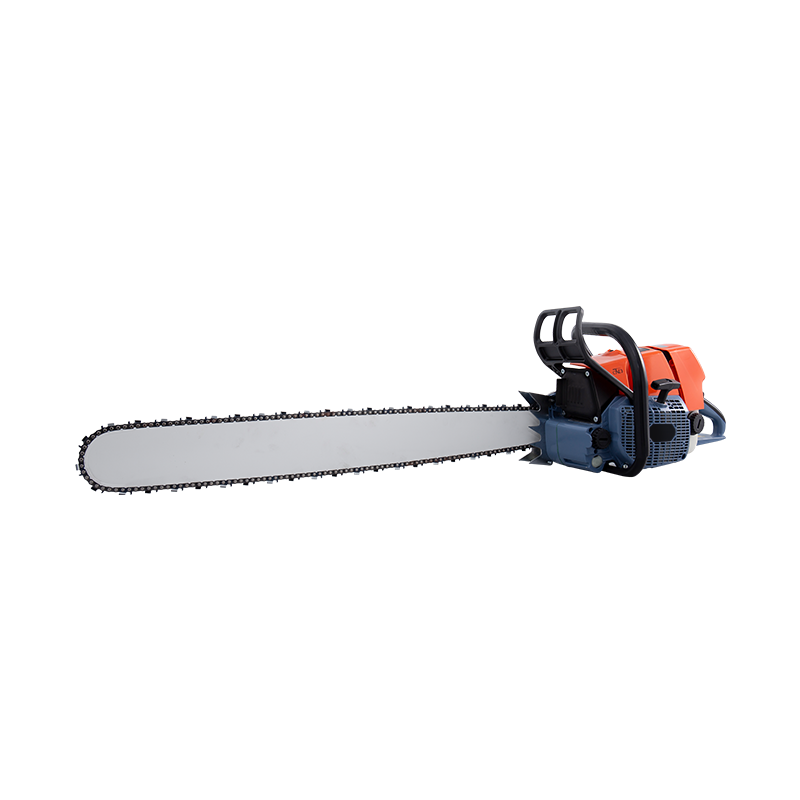
Every petrol-powered chainsaw on the market — from the lightest homeowner trim saw to the heaviest professional felling unit — is built around a single cylinder two-stroke engine. This is not a compromise or a cost-cutting measure: the single cylinder two-stroke configuration is the result of over seven decades of engineering refinement specifically for handheld cutting tools, and it remains the dominant architecture because no other power source currently matches its combination of power-to-weight ratio, reliability under continuous load, and ability to operate at any angle without lubrication failure.
A two-stroke single cylinder engine completes one power stroke per revolution of the crankshaft. With no camshaft, valvetrain, or separate lubrication circuit, the engine has fewer moving parts than a four-stroke unit of equivalent displacement, which translates directly to lower weight and simpler field maintenance. The trade-off is fuel efficiency: two-stroke engines consume more fuel per unit of power output and require oil mixed into the fuel, typically at ratios between 40:1 and 50:1 depending on manufacturer specification. In chainsaw applications, where the engine runs at full throttle for sustained periods during cutting and then idles between cuts, this characteristic is well understood and accepted by users.
Understanding the single cylinder engine's design parameters — displacement, bore and stroke, power output, and idle/operating RPM range — is the starting point for selecting a chainsaw that matches the intended workload without being unnecessarily heavy or underpowered for the task.
Displacement Classes and What They Mean in Practice
Chainsaw displacement — measured in cubic centimetres (cc) or cubic inches (ci) — is the single most reliable indicator of the engine's power class and intended application. The market segments into broadly defined displacement categories that correspond to real differences in cutting capacity, weight, and durability under sustained use.
| Displacement Range | Power Output (kW) | Typical Weight (kg, without bar) | Primary Application |
|---|---|---|---|
| 25–35 cc | 1.0–1.5 | 2.5–3.5 | Pruning, limbing, light firewood up to 25 cm diameter |
| 36–50 cc | 1.5–2.5 | 3.5–4.8 | Homeowner felling, farm use, softwood up to 40 cm |
| 51–70 cc | 2.5–4.0 | 4.8–6.5 | Professional felling, mixed hardwood/softwood forestry |
| 71–120 cc+ | 4.0–7.5+ | 6.5–10.0+ | Milling, large hardwood felling, storm clearance |
The 36–50 cc range represents the largest share of global unit sales and is where most consumers encounter their first purpose-built felling chainsaw. Engines in this class typically produce between 1.8 and 2.3 kW at operating speeds of 9,000–13,000 RPM and are matched with guide bars between 35 and 45 cm. They are capable of felling trees up to 35–40 cm diameter butt-end in softwood species, and somewhat smaller diameters in hardwood, without placing the engine under sustained overload.
Professional forestry operators working in commercial timber harvesting typically use 50–70 cc engines as their primary felling saws. This class offers the optimum balance between power output and all-day carry weight; a 60 cc saw weighing 5.5 kg without bar can be operated for a full shift with manageable fatigue, while its torque curve sustains chain speed through hardwood cuts that would stall a smaller engine.
Engine Architecture: Bore, Stroke, Porting, and RPM Range
Within any given displacement class, the relationship between bore diameter and stroke length shapes the engine's power delivery characteristics. Short-stroke, large-bore engines rev more freely, achieve higher peak RPM, and deliver power as a high-speed surge — a characteristic favoured in competition cutting and professional felling where chain speed through the cut is paramount. Longer-stroke engines of the same displacement produce more torque at lower RPM, which translates to better pulling power when the bar is buried deep in a large-diameter hardwood log and chain speed has dropped.
The transfer porting layout — the passages through which the fuel-air mixture moves from the crankcase to the combustion chamber during the intake phase — is one of the primary performance differentiators between entry-level and professional-grade single cylinder chainsaw engines. Modern professional engines use five-port or Uniport transfer designs that improve scavenging efficiency, reducing the proportion of fresh charge lost out the exhaust port before combustion. This directly improves specific power output and reduces fuel consumption relative to simpler three-port designs used in lower-cost saws.
Idle speed on a chainsaw single cylinder engine is typically set between 2,500 and 3,000 RPM — high enough to keep the engine running reliably but below the clutch engagement speed of approximately 3,500–4,000 RPM, ensuring the chain remains stationary at idle. Maximum no-load speed is governed between 12,500 and 14,500 RPM on most production engines to prevent piston and crankshaft damage from over-revving when the chain exits the cut. Under load during cutting, operating speed typically falls to 8,000–11,000 RPM, the range where the engine produces peak torque.
Ignition, Carburetion, and Starting Systems
The ignition system in a single cylinder chainsaw engine is a capacitor discharge ignition (CDI) unit with no external battery or alternator. A permanent magnet on the flywheel passes a stator coil on each revolution, generating the charge that fires the spark plug at a precisely timed point before top dead centre. CDI systems are maintenance-free in normal service; the most common ignition-related failure in the field is a fouled spark plug caused by incorrect fuel-oil mixture or excessive idling, rather than a failure of the ignition module itself.
Carburetion on single cylinder chainsaw engines is handled by a diaphragm carburettor — a design that functions correctly at any operating angle, including inverted, because it uses flexible diaphragms rather than a float bowl to meter fuel. The carburettor has three adjustment screws: low-speed (L), high-speed (H), and idle (T). Professional-grade saws from major manufacturers now use carburettors with fixed or limited-adjustment high-speed needles that are preset at the factory and cannot be leaned out to the point of engine damage, a response to emissions regulations and warranty claims caused by user over-leaning.
Starting systems range from a basic recoil pull-start to systems incorporating compression release valves, primer bulbs, and automatic decompression mechanisms. On engines above 50 cc, where compression pressures are high enough to make cold-starting physically demanding, automatic decompression valves that bleed pressure on the compression stroke during starting — and then seat themselves at operating RPM — are standard equipment on professional models. This reduces the pull force required to crank the engine by approximately 40%, enabling reliable starting without the risk of back-kick injury.
Chain and Bar Compatibility with Single Cylinder Engine Output
The chain and bar combination fitted to a single cylinder chainsaw must be matched to the engine's output to achieve safe, efficient cutting. Running an undersized engine with an oversized bar places the engine under sustained overload, accelerating piston wear and clutch drum damage. Conversely, fitting a bar shorter than the engine's rated capacity leaves usable power on the table and increases chain speed beyond the range where cutting efficiency is optimal.
Chain pitch — the distance between drive links, measured as half the distance between three consecutive rivets — is the primary compatibility specification between the chain and the sprocket on the engine's clutch drum. The three most common pitches in single cylinder chainsaw applications are:
- 1/4" pitch — used on lightweight pruning and arborist top-handle saws in the 25–35 cc class; fine pitch allows fast chain speed with low engine torque
- 3/8" pitch (low profile) — the most common pitch for consumer saws in the 36–55 cc range; a compromise between cutting aggression and the torque required to drive the chain under load
- 3/8" full pitch and 0.404" — used on professional felling saws above 55 cc; larger pitch requires more engine torque but produces faster material removal per chain revolution in large-diameter timber
Drive link gauge — the thickness of the drive links that fit into the bar groove — must match the bar groove width exactly. Mismatched gauge causes the chain to run loose in the groove or bind under lateral load, accelerating bar rail wear and increasing the risk of chain derailment. The three standard gauges are 0.043", 0.050", and 0.058", with 0.050" being the most prevalent in the mid-displacement professional category.
Safety Features Specific to Single Cylinder Chainsaw Design
Single cylinder chainsaw engines operate at high power-to-weight ratios in close proximity to the operator, making integrated safety systems a mandatory rather than optional specification. Key safety mechanisms present on all current production chainsaws sold in regulated markets include:
- Chain brake: a mechanical or inertia-activated brake that stops the chain within 0.12 seconds of activation — the response time mandated by EN ISO 11681-1 for chainsaws sold in the EU. Activated by the operator's left hand contacting the front hand guard during a kickback event, or by the inertia sensor detecting the angular acceleration of a kickback rotation
- Throttle interlock: a two-step trigger mechanism that requires simultaneous depression of the throttle trigger and a rear handguard trigger before the engine will accelerate above idle, preventing unintended throttle application if the rear handle is gripped incorrectly
- Anti-vibration system: rubber or spring-damped mounts between the engine/powerhead unit and the handle assembly, reducing transmitted vibration to the operator's hands and arms to comply with EU Machinery Directive vibration exposure limits. On well-designed professional saws, handle vibration levels are held below 4–6 m/s² at the front handle during cutting
- Chain catcher: a metal or polymer guard below the bar mounting point that intercepts a broken or derailed chain before it can reach the operator's right hand
- Stop switch: a clearly marked, single-action engine kill switch accessible without repositioning the hands, required to default to the off position when released on all compliant designs
Kickback — the rapid upward rotation of the bar that occurs when the tip contacts material during a cut — is the primary cause of serious chainsaw injuries. The reduced-kickback chain designs now standard on consumer saws use depth gauge profiles and cutter geometries that limit the angle of tip engagement, reducing kickback energy by 40–60% compared to full-chisel professional chains, at a modest cost in aggressive cutting performance.
Maintenance Intervals and Long-Term Engine Care
The service life of a single cylinder chainsaw engine is determined primarily by three maintenance practices: correct fuel mixture preparation, air filter cleanliness, and bar/chain lubrication. Neglecting any one of these significantly shortens engine and drivetrain life.
Fuel mixture must be prepared with a two-stroke oil rated for air-cooled engines — not marine or water-cooled formulations. Most manufacturers specify fully synthetic or semi-synthetic two-stroke oil at 50:1 with their recommended oil; some older engine designs specify 40:1. Fuel should be used within 30 days of mixing, as petrol oxidises and phase-separates in storage, leaving gum deposits in the carburettor that restrict needle and jet passages. Fuel stabiliser added at mixing extends usable life to 90 days and is recommended for seasonal users.
The air filter on a chainsaw single cylinder engine operates in an extremely dusty environment — wood chips, bark dust, and sawdust accumulate on the filter element within minutes of cutting. A partially blocked air filter leans the fuel mixture by reducing airflow relative to the fixed fuel delivery, increasing combustion temperature and accelerating piston wear. Filters should be checked and cleaned every 5–10 operating hours in normal conditions, and daily in dusty hardwood cutting. Most current models use foam or felt elements that can be cleaned with compressed air or rinsed with warm water and dried before reinstallation.
Bar and chain lubrication is handled by an automatic oil pump driven off the crankshaft, which meters bar oil to the guide bar groove continuously during operation. The correct bar oil viscosity — typically ISO VG 68–100 in summer conditions, lighter in cold weather — is important: too light an oil flings off the bar at operating speed; too viscous an oil does not reach the tip sprocket. Checking bar oil level before each refuelling stop and ensuring the oil outlet port in the bar mounting area is clear of sawdust are the two most commonly overlooked maintenance steps that lead to premature bar and chain wear.