English
 Español
Content
What Is a Gas Brush Cutter?
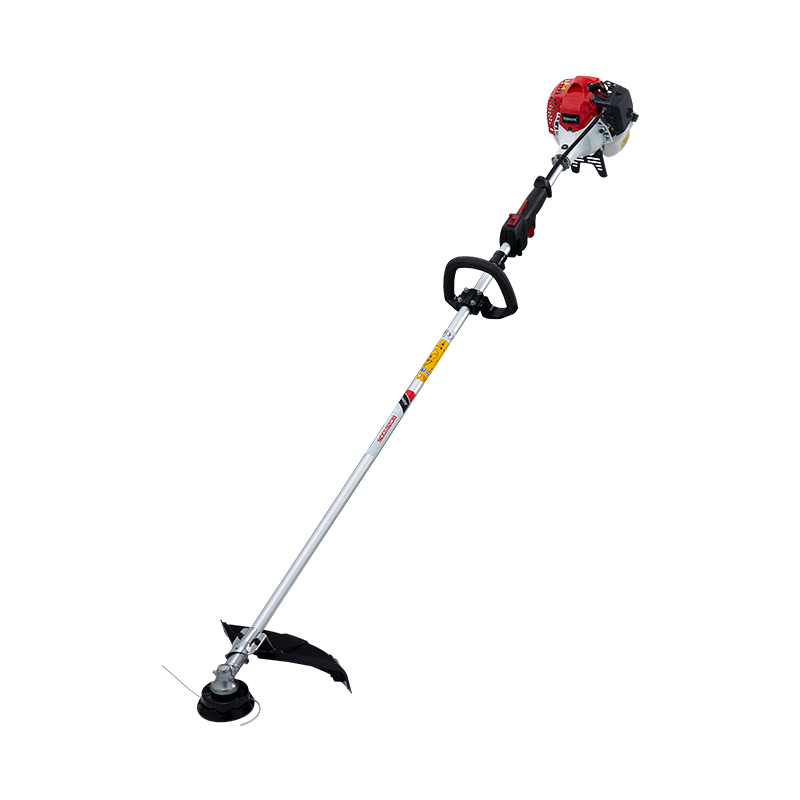
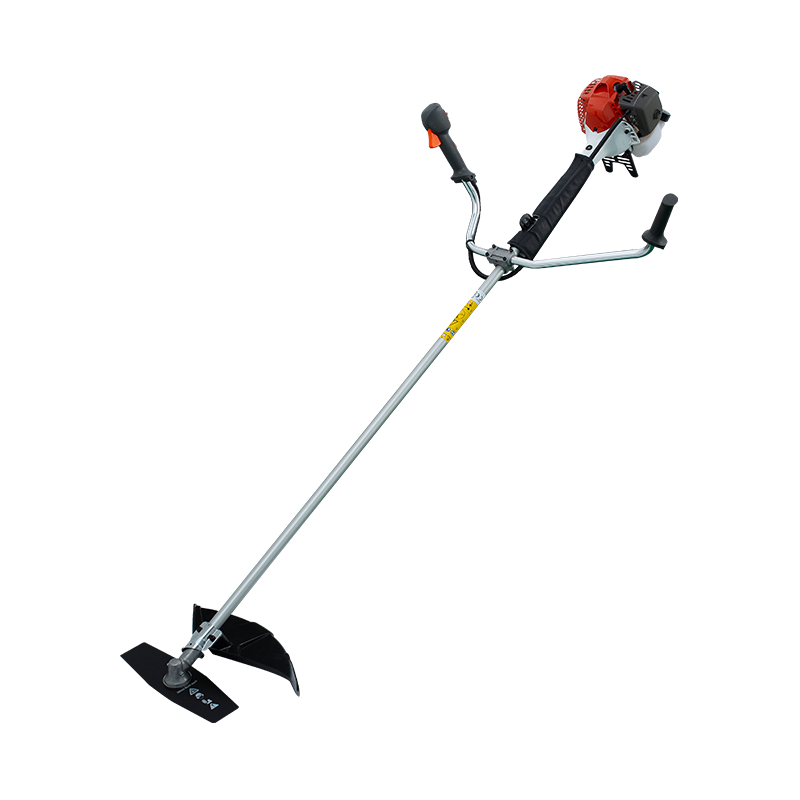
A gas brush cutter is a gasoline-powered cutting tool designed to clear vegetation that exceeds the capability of a standard string trimmer — thick weeds, woody brush, brambles, saplings up to 2–3 inches in diameter, and overgrown grass on uneven terrain. Where a string trimmer relies on nylon line spinning at high speed to cut soft grass, a gas brush cutter uses a metal blade or heavy-duty blade attachment mounted on a rigid or flexible drive shaft, capable of cutting through material with structural strength that nylon cannot handle.
The power source distinguishes gas brush cutters from their battery-powered counterparts in a fundamental way: gasoline engines deliver sustained high torque across extended runtime without degradation. A 25cc–52cc two-stroke engine — the typical displacement range for handheld brush cutters — produces consistent cutting power for hours, limited only by the fuel tank capacity (usually 0.4–1.0 liters) rather than battery state. This makes gas brush cutters the tool of choice for large acreage clearing, professional landscaping, forestry maintenance, and any application where cordless battery runtime would require multiple recharges per session.
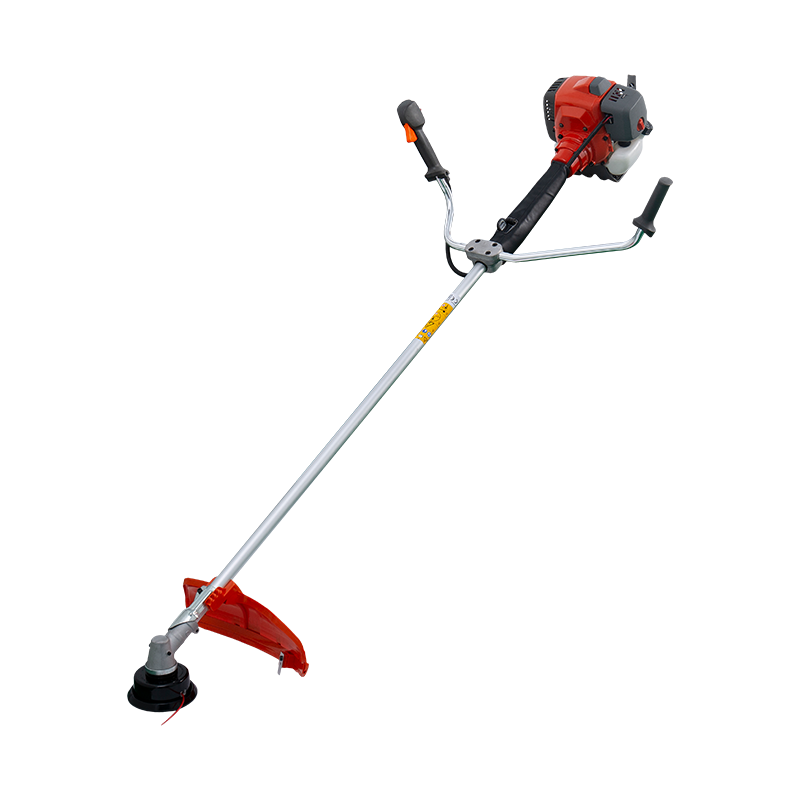
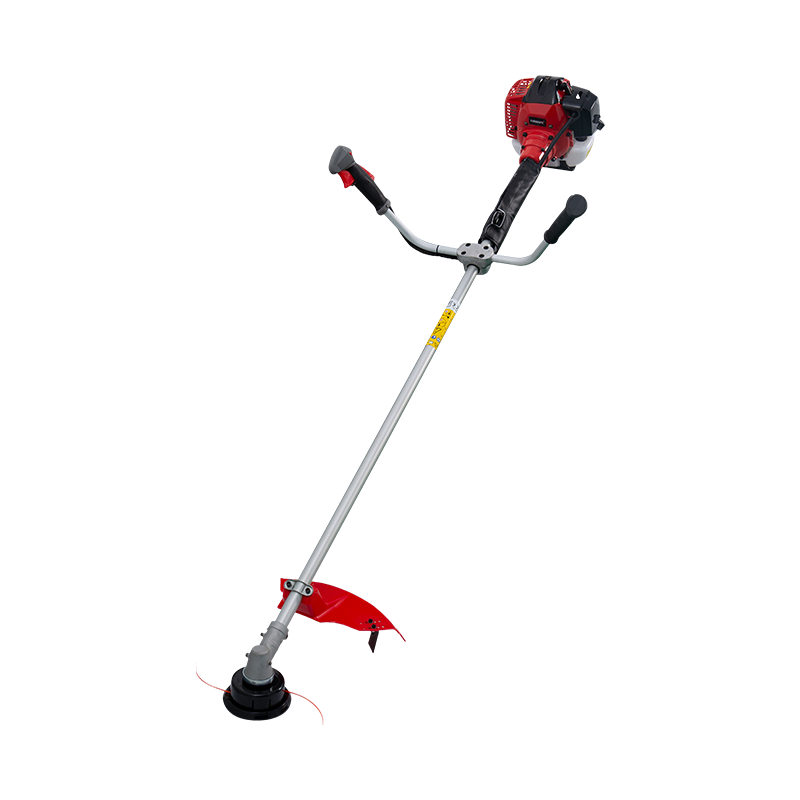
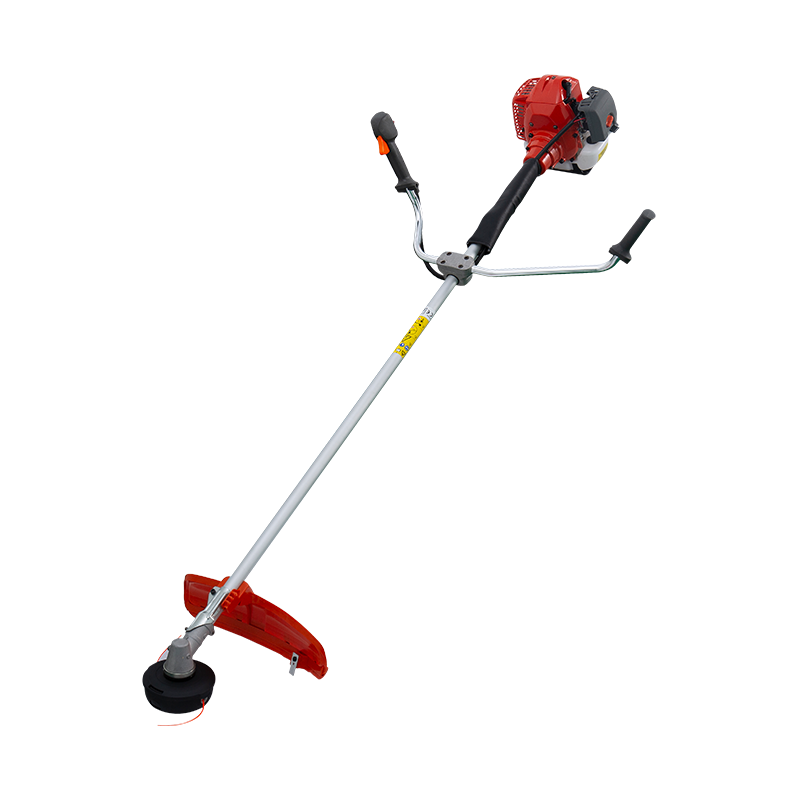
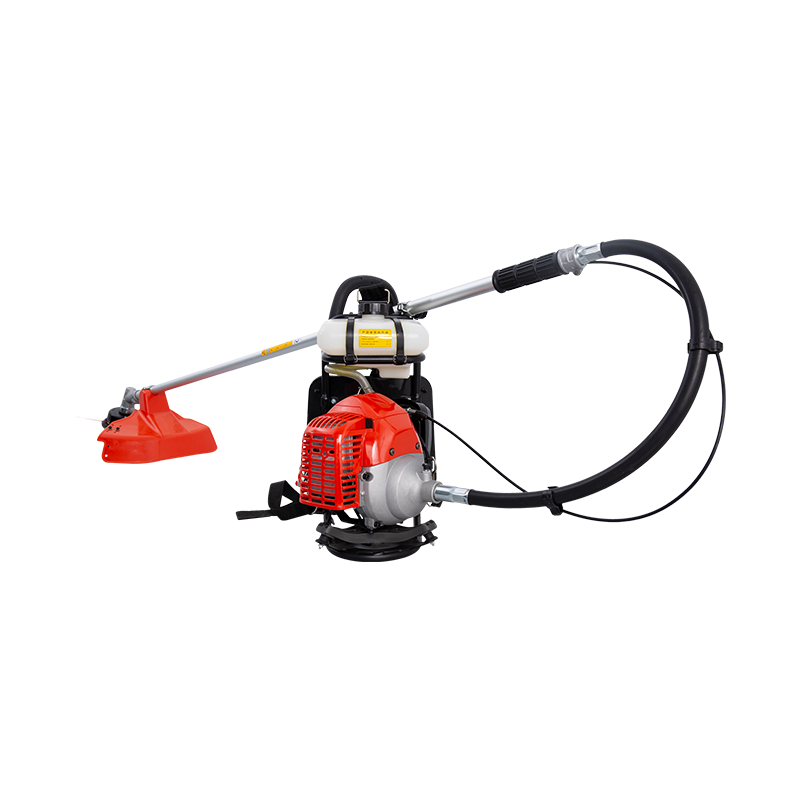
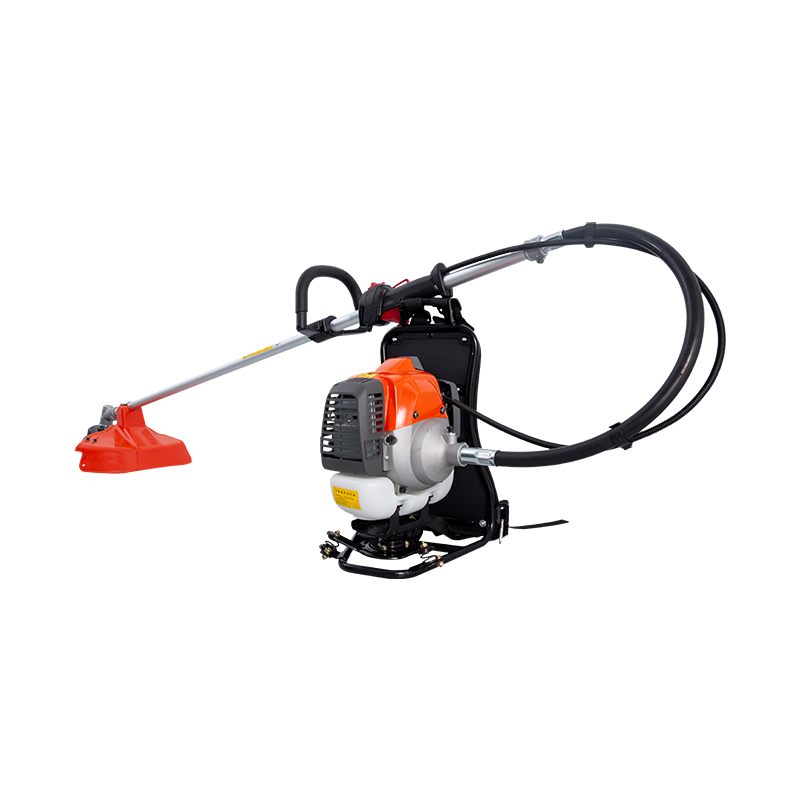
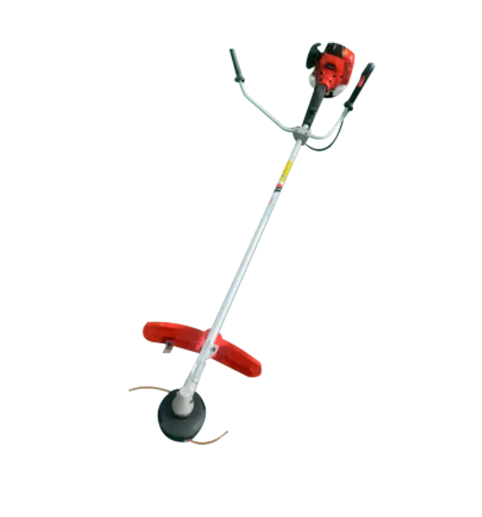
Most gas brush cutters share a common architecture: a two-stroke or four-stroke engine at one end of a straight or curved shaft, a drive mechanism transmitting power to the cutting head, a loop or bicycle-style handlebar for control, and a shoulder harness that distributes the tool's weight — typically 5–8 kg — across the operator's body during extended use.
Two-Stroke vs Four-Stroke Gas Brush Cutters
The engine type is the most consequential specification in a gas brush cutter, determining the tool's power-to-weight ratio, fuel management requirements, maintenance demands, and emissions profile.
Two-Stroke Engines
The majority of handheld gas brush cutters use two-stroke (2-cycle) engines. A two-stroke fires on every revolution of the crankshaft, producing a higher power output relative to engine displacement than a four-stroke of equivalent size. This translates to a lighter, more compact tool for the same cutting power — a critical advantage in a tool carried and swung for hours at a time. Two-stroke engines also lubricate themselves through oil mixed directly into the fuel (typically at a 40:1 or 50:1 ratio), eliminating a separate oil reservoir and simplifying the crankcase design.
The trade-offs are noise, fuel mix discipline, and emissions. Two-stroke engines are louder than four-strokes of similar output, require pre-mixed fuel (using the wrong mix ratio is a common cause of engine seizure), and produce higher hydrocarbon emissions — a regulatory concern in some jurisdictions and a practical concern for operators working in enclosed or partially enclosed spaces.
Four-Stroke Engines
Four-stroke brush cutters use separate fuel and oil circuits, run on straight gasoline, and produce lower emissions with less noise at equivalent displacement. They are heavier than two-stroke equivalents — typically 1–2 kg more for the same cutting capacity — but deliver smoother, lower-vibration operation suited to operators who prioritize long-shift comfort over absolute weight minimization. Four-stroke models are increasingly specified in commercial landscaping fleets in emissions-regulated areas and markets moving toward compliance with CARB and EPA Phase 3 standards.
| Factor | Two-Stroke | Four-Stroke |
|---|---|---|
| Weight | Lighter | Heavier |
| Fuel | Pre-mixed gasoline/oil | Straight gasoline |
| Emissions | Higher HC emissions | Lower emissions |
| Vibration | Higher | Lower |
| Maintenance complexity | Lower (no oil changes) | Higher (oil changes required) |
| Power-to-weight ratio | Higher | Lower |
Engine Displacement and Cutting Capacity
Engine displacement — measured in cubic centimeters (cc) — is the most reliable proxy for cutting capability when comparing gas brush cutters across manufacturers. Larger displacement delivers more torque at the cutting head, allowing the blade to maintain cutting speed under load without bogging down in dense material.
- 21cc–26cc: Entry-level brush cutters suited to homeowner and light-duty use. Handles thick weeds, coarse grass, and light brush. Not recommended for sustained sapling cutting or clearing heavily overgrown land.
- 28cc–36cc: Mid-range displacement covering the majority of residential and semi-professional applications. Capable of cutting woody stems up to approximately 1.5 inches in diameter with appropriate blade selection. The most common category in the consumer market.
- 40cc–52cc: Professional-grade displacement for sustained heavy clearing. Handles saplings, dense bramble, invasive species like kudzu or cane, and high-volume commercial work. Heavier and more expensive, but meaningfully more productive per hour on tough material.
- Above 52cc: Specialist and forestry-grade tools, sometimes configured as walk-behind or wheeled brush cutters rather than handheld. Used in land clearing, utility right-of-way maintenance, and forestry applications requiring maximum sustained torque.
Blade Types for Gas Brush Cutters
Blade selection determines what vegetation a brush cutter can effectively clear. Most gas brush cutters ship with at least one blade and are compatible with a range of aftermarket attachments. Matching the blade to the material — rather than defaulting to the included blade for all tasks — is the single most effective way to improve cutting performance and blade life.
- 2-tooth / 3-tooth blade: Heavy-duty blades for woody material, saplings, and dense brush. Fewer teeth means each tooth takes a larger bite per revolution, maintaining cutting speed in thick stems where a multi-tooth blade would bind. The standard blade for serious brush clearing work.
- 8-tooth / 10-tooth blade: More teeth produce a finer cut and are better suited to grass and light brush. Cuts more smoothly in mixed vegetation but less effective in pure woody material. Common on mid-range consumer brush cutters for general yard maintenance.
- 40-tooth / 60-tooth circular saw blade: High tooth count for cutting small trees, hardwood saplings, and bamboo. Functions essentially as a small circular saw. Requires the highest operator skill level and most robust guard configuration. Not suitable for general brush clearing due to kickback risk in mixed vegetation.
- Plastic/rubber flail blades: Multi-segment flexible blades that break away on impact with rocks or fence posts rather than shattering. Used in roadside and utility maintenance where ground obstacles are common and metal blade fragmentation is a safety concern.
- Grass/weed string head (nylon): Most gas brush cutters accept a nylon string head as an interchangeable attachment, allowing the same tool to serve as a precision string trimmer for finishing work around obstacles after the bulk clearing is done with a blade.
Straight Shaft vs Curved Shaft Gas Brush Cutters
The shaft geometry affects reach, power transmission efficiency, and the range of attachments the tool can accept.
Straight shaft models transmit power through a rigid metal drive shaft running the full length of the tool. This design handles higher torque without flexion losses, accepts more aggressive blade types, and typically supports the wider range of interchangeable attachment heads (edgers, tiller attachments, hedge trimmer heads). Straight shaft brush cutters are the standard configuration for professional use and for any application involving metal blades. The tool is also longer overall, making it better suited to taller operators and improving reach under fences and into corners.
Curved shaft models use a flexible cable drive inside a curved housing. The curved geometry brings the cutting head closer to the operator, making the tool more maneuverable around obstacles and more comfortable for shorter operators. However, curved shaft models transmit less torque than straight shaft equivalents at the same engine displacement and are generally not recommended for sustained metal blade use. They are better matched to string trimmer heads for general maintenance work rather than heavy brush cutting.
For dedicated brush cutting — the application the tool category is named for — straight shaft configuration is almost always the correct choice.
Gas Brush Cutter Maintenance Essentials
A gas brush cutter operating under heavy load in dusty, debris-rich environments requires more active maintenance than most power tools. Neglecting key maintenance points is the primary cause of premature engine failure and shortened blade life in both consumer and professional equipment.
- Air filter: The most critical maintenance item. A clogged air filter starves the engine of air, causing it to run rich, foul the spark plug, and lose power. Clean foam filters after every 10–15 hours of use in dusty conditions; replace paper cartridge filters per the manufacturer's interval (typically every 50 hours or seasonally).
- Spark plug: Inspect annually and replace if the electrode shows erosion or carbon fouling. A consistent starting problem or rough idle is often a $3 spark plug, not a carburetor rebuild.
- Fuel system: Use fresh fuel — ethanol-blended gasoline degrades within 30 days in a vented fuel tank, leaving varnish deposits in the carburetor. Use ethanol-free fuel where available, or add a fuel stabilizer to mixed fuel stored for more than two weeks. Drain the tank completely before storage periods exceeding 30 days.
- Blade inspection: Check blade mounting hardware for tightness before each use. Inspect blades for cracks, missing teeth, or deformation after striking rocks or solid obstacles. A damaged blade must be replaced — do not attempt to grind out cracks or weld broken teeth. Blade failure at operating speed is a serious injury hazard.
- Drive shaft lubrication: Straight shaft models with a solid inner drive shaft require periodic grease application at the gear head connection point. Most manufacturers specify a moly-based grease applied every 25–50 hours. Curved shaft models with a flexible cable drive require lubrication at both ends of the cable at the same interval.
- Cooling fins: Two-stroke engines are air-cooled through fins cast into the cylinder housing. Grass clippings and debris pack into these fins during use, restricting airflow and causing the engine to overheat. Clean the fins with compressed air or a stiff brush at the end of each working session.
Safety Practices for Gas Brush Cutter Operation
Gas brush cutters with metal blades are among the higher-risk handheld power tools in common use. The cutting blade operates at 7,000–10,000 RPM and will project debris — rocks, metal fragments, bone-dry woody material — at high velocity in any direction. Blade contact injuries are severe. Most are preventable with consistent PPE use and correct operating technique.
- Face and eye protection: A full-face shield rated for brush cutter use, not safety glasses alone. Debris projected from a metal blade travels faster and at greater mass than nylon string debris.
- Cut-resistant leg protection: Chainsaw-style cut-resistant chaps or trousers with cut-resistant panels on the front of both legs. A momentary loss of blade control brings the cutting edge directly to leg height.
- Sturdy footwear: Steel-toed boots with ankle support. Never operate a brush cutter in open-toe footwear or low-cut shoes.
- Hearing protection: Two-stroke brush cutters typically operate at 95–105 dB at the operator's ear. Hearing damage accumulates from exposures above 85 dB; ear muffs or plugs are non-optional for sessions exceeding 15–20 minutes.
- Exclusion zone: Maintain a minimum 15-meter clearance around all bystanders when operating with a metal blade. Always stop the engine before moving through gates, crossing obstacles, or handing the tool to another person.