English
 Español
Content
What Is a Brush Cutter?
A brush cutter is a powered outdoor cutting tool designed to clear vegetation that is too dense, woody, or thick for a standard string trimmer to handle. Where a lawn trimmer uses a nylon line to cut soft grass, a brush cutter uses a hardened metal blade, metal-tipped disc, or heavy-duty cutting head to tackle overgrown weeds, brambles, saplings, reeds, and light brush up to several centimeters in diameter. The result is a tool capable of land clearing and rough vegetation management that would otherwise require a machete, scythe, or heavy machinery.
Brush cutters are distinguished from string trimmers primarily by their drive shafts and cutting attachments. Most brush cutters use a straight, rigid drive shaft rather than a curved flexible one, because the torque required to spin a metal blade at cutting speed demands a direct mechanical path from the engine or motor to the blade. They are also significantly heavier and are typically worn on a harness rather than held at arm's length, distributing the load across the operator's shoulders and hips during extended use.
Types of Brush Cutters
Brush cutters are available in several configurations, each suited to different scales of work, terrain types, and operator preferences.
Handheld Brush Cutters
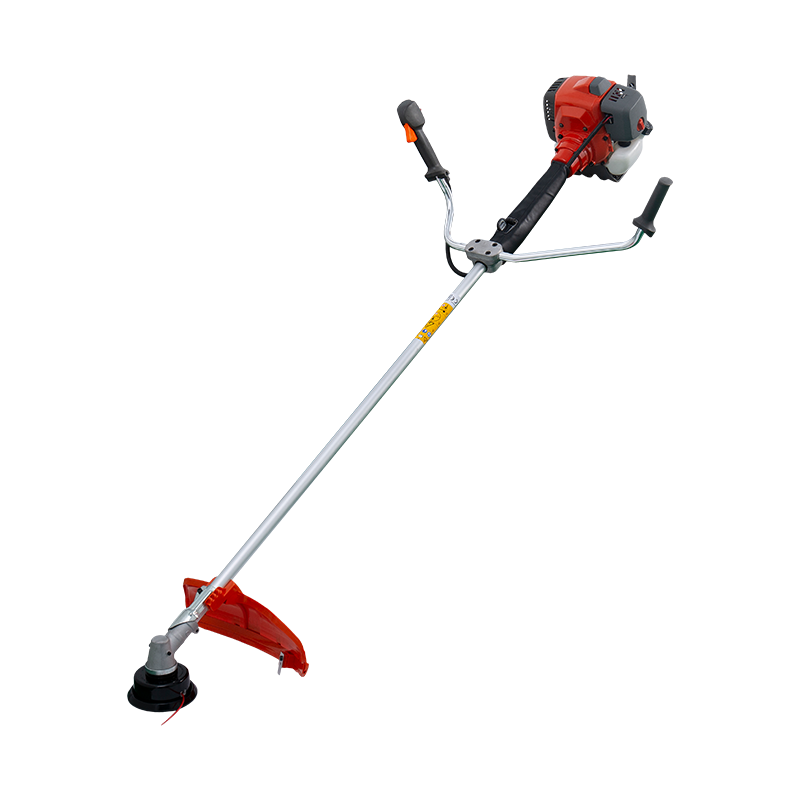
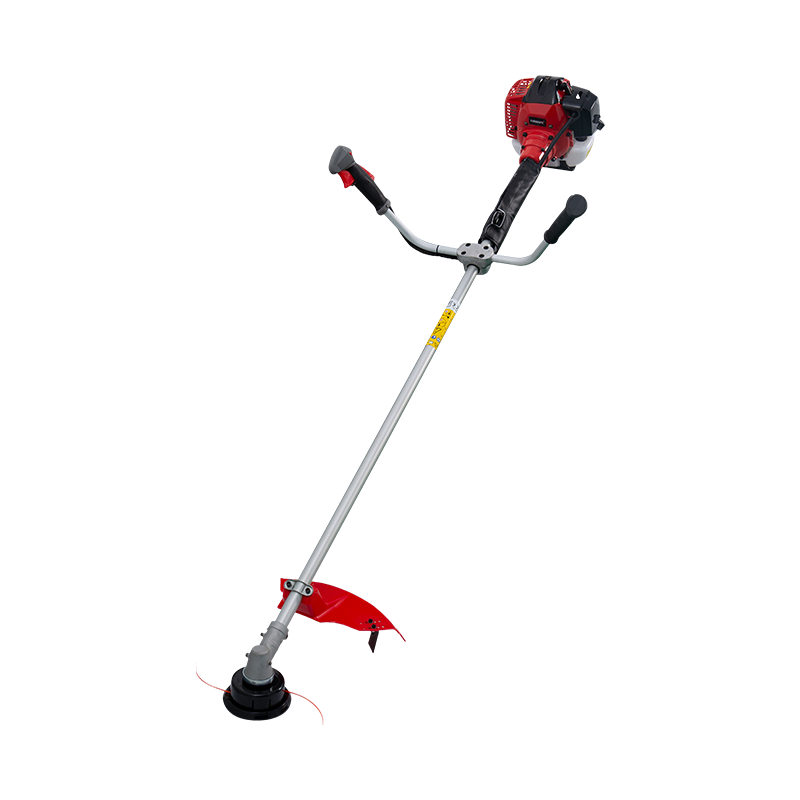
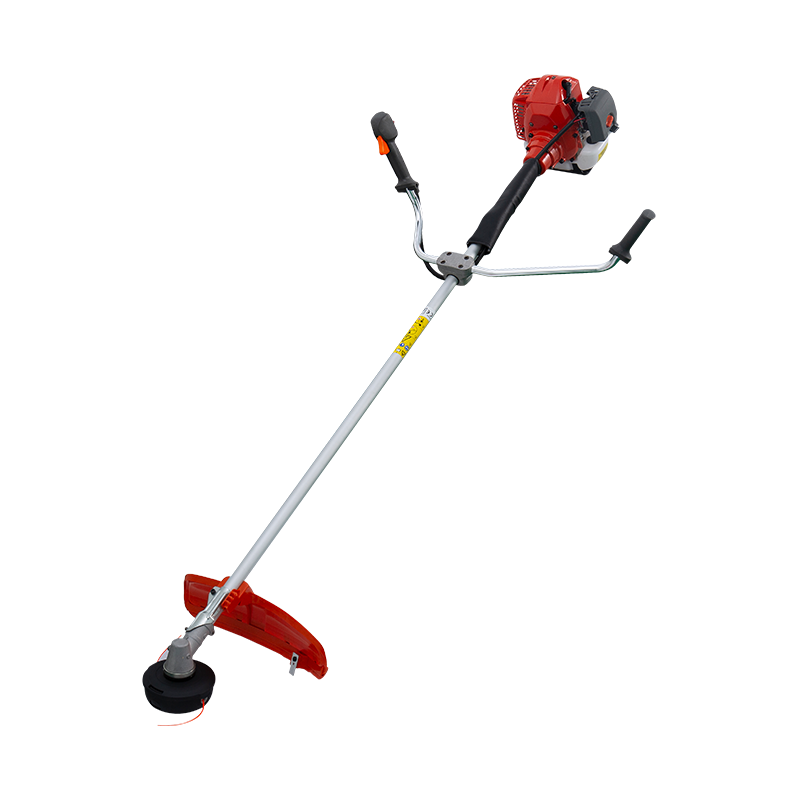
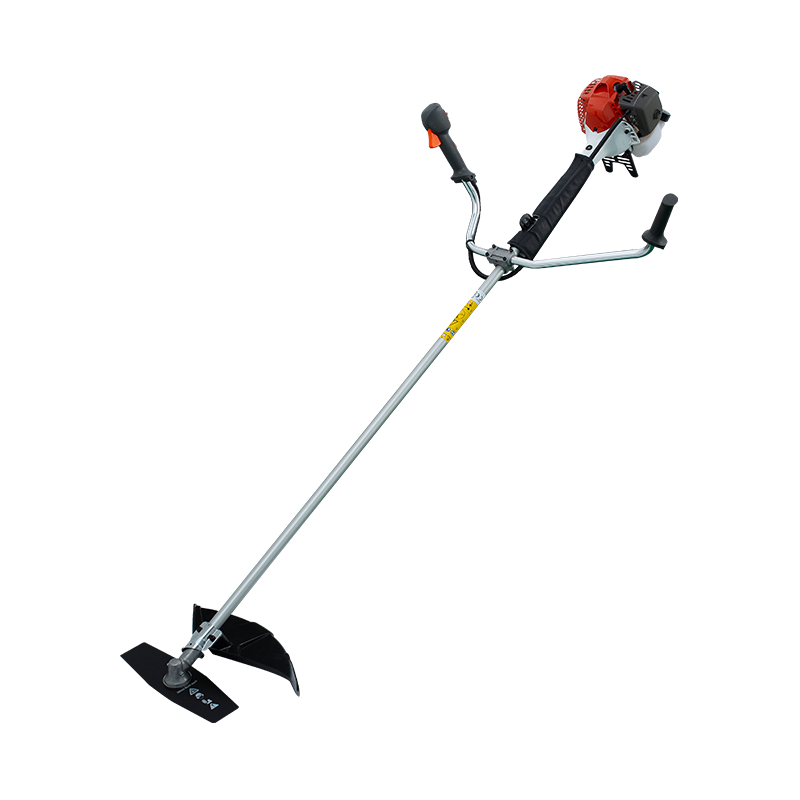
The handheld brush cutter—sometimes called a brush trimmer or clearing saw—is the most widely used format for professional landscaping, agriculture, and forestry maintenance. It consists of a power unit (engine or motor) mounted at one end of a straight or split shaft, a loop or bicycle handle set positioned mid-shaft for two-handed control, and a cutting head at the opposite end protected by a plastic or metal blade guard. The operator wears a shoulder harness that transfers the tool's weight—typically 4–9 kg for gasoline models, 3–6 kg for battery-electric models—away from the arms, enabling hours of continuous operation.
Handheld brush cutters are highly maneuverable around trees, fence posts, terraced slopes, and irregular terrain where ride-on equipment cannot access. They are the standard tool for orchard floor management, roadside verge maintenance, firebreak clearing, and smallholder land preparation across much of the world.
Backpack Brush Cutters
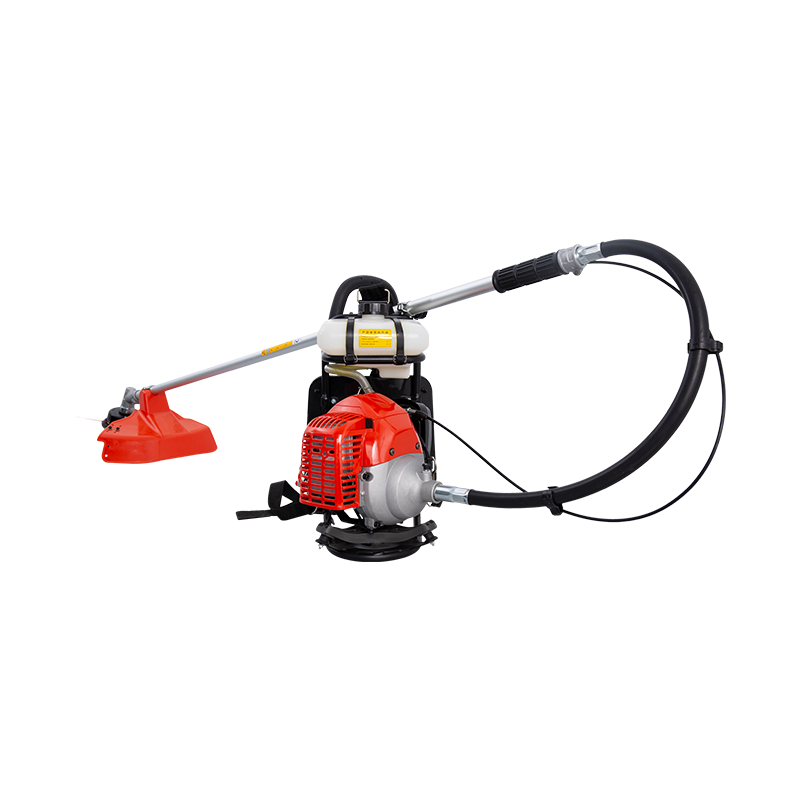
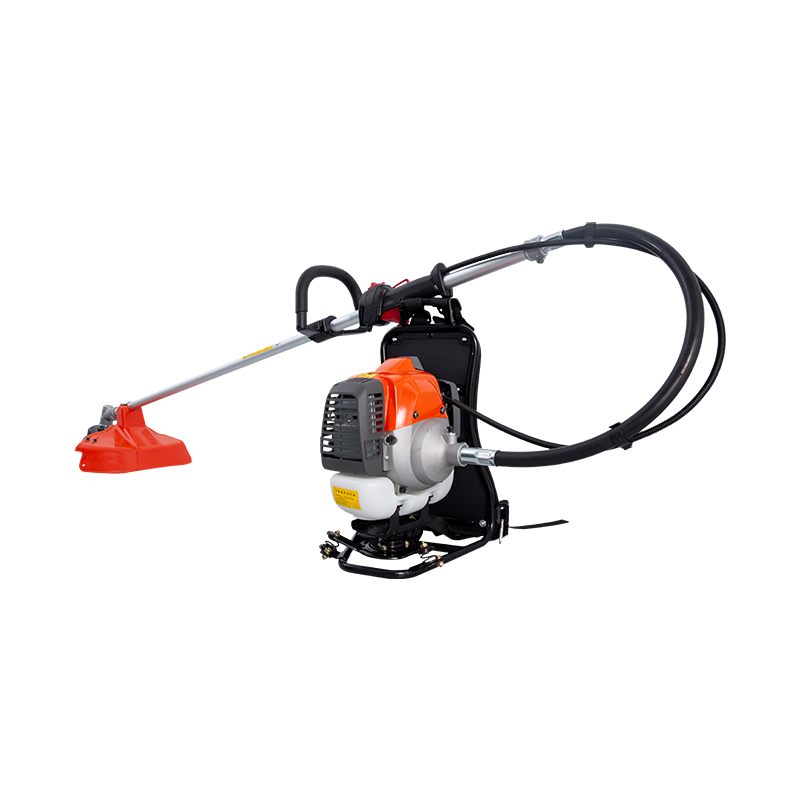
Backpack-style brush cutters mount a larger displacement engine (typically 40–80 cc) in a frame worn on the operator's back, connected by a flexible or rigid drive shaft to a separate cutting head. Separating the power unit from the cutting head reduces vibration transmission to the operator's hands and arms, a significant advantage during long work sessions. Backpack models are favored in professional forestry and large-scale agricultural clearing where the additional power and reduced operator fatigue justify the higher weight—up to 12–15 kg fully loaded.
Walk-Behind and Wheeled Brush Cutters
For clearing large flat areas—overgrown fields, highway medians, pipeline rights-of-way—walk-behind brush cutters mount a high-powered engine on a wheeled frame with a wide cutting deck. These machines handle material that handheld tools cannot: stems up to 5 cm in diameter, multi-stemmed shrubs, and tall grass in heavy mats. They require no harness and are pushed rather than swung, making them accessible to operators who cannot manage the physical demands of handheld models over large areas.
Power Sources: Gasoline vs. Battery vs. Corded Electric
The choice of power source shapes every practical aspect of brush cutter use: runtime, maintenance requirements, noise level, environmental impact, and total cost of ownership.
Gasoline (Petrol) Engines
Two-stroke and four-stroke gasoline engines remain the dominant power source for professional-grade brush cutters. Two-stroke engines in the 25–65 cc displacement range offer an excellent power-to-weight ratio, simple construction, and the ability to operate at any angle—including inverted—without oiling issues. Four-stroke engines produce more torque at lower rpm, consume less fuel, and emit lower levels of hydrocarbons, but are heavier and more sensitive to operating orientation. Gasoline brush cutters deliver unlimited runtime as long as fuel is available, making them the practical choice for remote rural work and full-day professional use where battery charging infrastructure is absent.
Battery-Electric (Cordless)
Lithium-ion battery brush cutters have advanced rapidly since 2018. Professional platforms operating at 36 V, 56 V, or 80 V now deliver cutting performance comparable to 25–35 cc gasoline models, with runtimes of 30–90 minutes per charge depending on battery capacity and cutting load. The advantages are substantial: zero exhaust emissions, significantly lower noise (typically 85–92 dB vs. 95–105 dB for gasoline equivalents), near-zero vibration from the brushless motor, and no carburetor maintenance. For residential users and contractors working in noise-sensitive urban environments, battery brush cutters have largely displaced gasoline models in the light-to-medium duty segment.
Corded Electric
Corded electric brush cutters offer continuous runtime and consistent power delivery but are constrained by cord length and the need for a power outlet. They are suitable for maintained gardens, orchard rows with power access, and light commercial applications within approximately 30–40 meters of a power source. Their low maintenance requirements and quiet operation make them a practical choice for small-scale users who do not need the mobility of a gasoline or battery model.
| Power Source | Typical Power Output | Runtime | Best For |
|---|---|---|---|
| 2-Stroke Gasoline | 0.7–2.5 kW | Unlimited (refuel) | Professional / remote rural use |
| Battery (Li-ion) | 0.5–1.5 kW | 30–90 min per charge | Urban / residential / light commercial |
| Corded Electric | 0.4–1.0 kW | Unlimited (cord range) | Small gardens / orchard rows |
Cutting Heads and Blade Types
The cutting attachment determines what vegetation a brush cutter can tackle and how efficiently it does so. Most brush cutters accept interchangeable heads, allowing the operator to match the tool to the task.
Metal Circular Blades
Steel circular blades with 3, 4, 8, or 80 teeth (the last for near-chainsaw-like woody stem cutting) are the defining attachment of a true brush cutter. An 80-tooth carbide-tipped blade can cut through woody stems up to 80 mm in diameter—small trees and established shrubs that would destroy any nylon line system. Fewer-toothed blades (3–4 teeth) are faster-cutting and better suited to dense grass and reed beds; more teeth produce a finer cut on woody material. Metal blades require specific PPE: full face shield, cut-resistant leg protection, and steel-toe boots, because a shattered or deflected tooth becomes a dangerous projectile.
Plastic Blade Heads
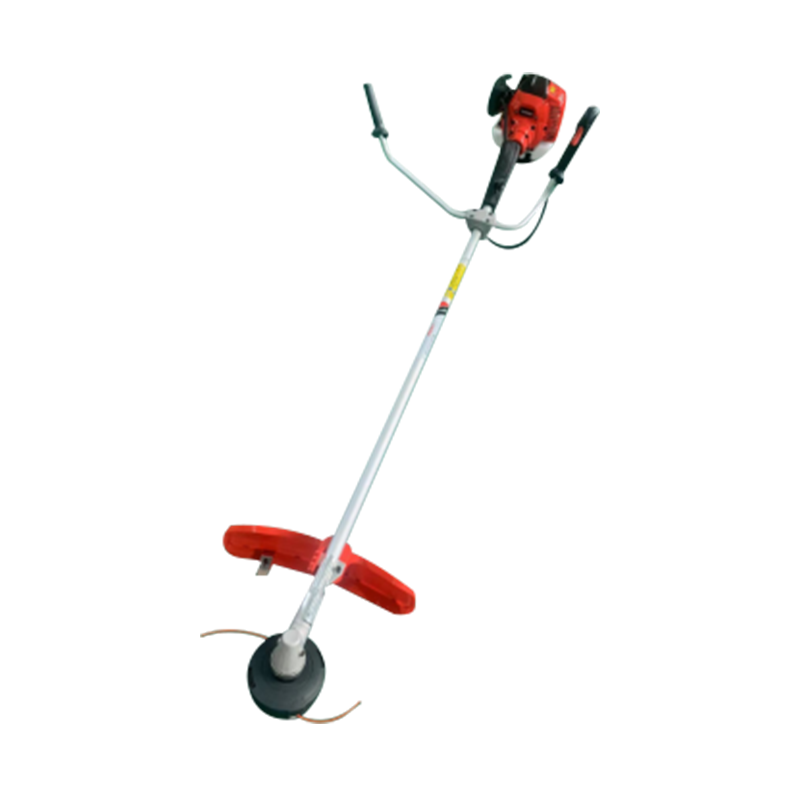
Multi-blade plastic heads—typically carrying 3 or 4 injection-molded polypropylene blades—offer a compromise between the safety of nylon line and the cutting ability of metal blades. They handle coarse grass, light weeds, and young woody growth more aggressively than nylon while presenting far lower injury risk from blade contact or ejected debris. Plastic blades are the standard choice for handheld brush cutter use in public spaces, parks, and roadside maintenance where bystanders may be present.
Heavy-Duty Nylon Line Heads
Large-diameter nylon line heads (3.0–4.0 mm line diameter) on brush cutters handle tall grass and soft weeds that would be inefficient to clear with a metal blade. They are commonly used in combination with a blade—operators switch heads depending on the density of the material being cleared—and are the safest head type for work in areas where hidden obstacles such as rocks, fence wire, or irrigation lines may be present.
Key Features to Evaluate When Buying a Handheld Brush Cutter
For buyers focusing on handheld brush cutter models, several specification and design factors meaningfully affect long-term satisfaction and productivity.
- Engine displacement or motor voltage: For gasoline models, 25–35 cc covers most homeowner and light professional tasks; 40 cc and above is appropriate for sustained heavy clearing. For battery models, 36 V platforms suit light to moderate work; 56 V and 80 V platforms match gasoline performance in the 30–40 cc class.
- Drive shaft type: A solid straight drive shaft is mandatory if you intend to use metal blades; flexible curved shafts are for nylon line only and cannot safely transmit the torque required for blade operation.
- Anti-vibration system: Prolonged exposure to hand-arm vibration above 2.5 m/s² is a recognized occupational health hazard. Look for rubber-isolated handle mounts and anti-vibration spring systems between the engine and drive tube; these can reduce vibration levels by 40–60% compared to rigidly coupled designs.
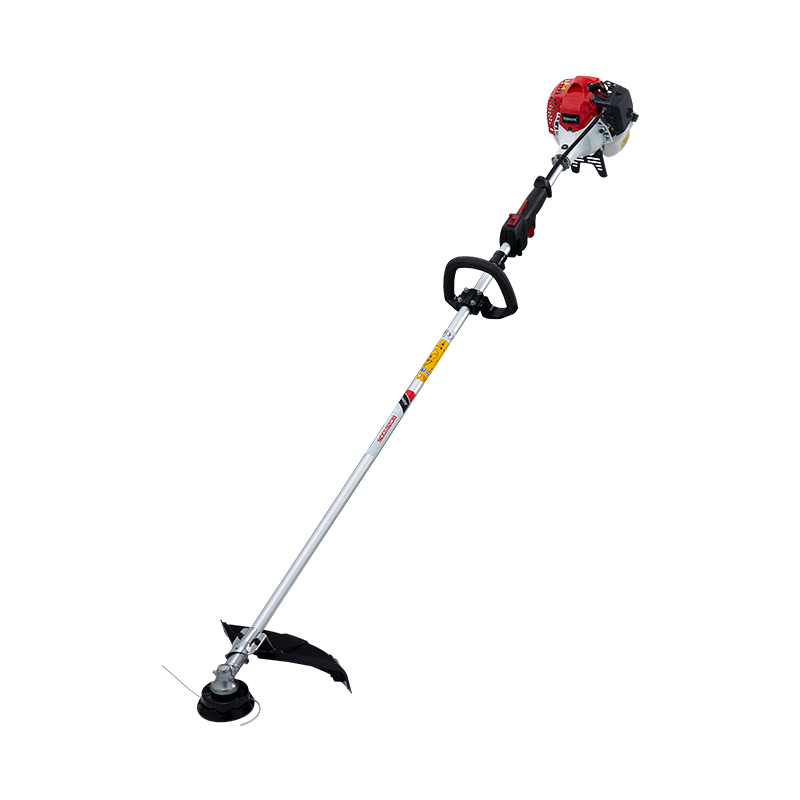
- Split shaft design: Models with a mid-shaft quick-release coupling allow the tool to be disassembled for transport and storage in a compact space, and enable rapid swapping of cutting heads including brush cutter attachments on a multi-tool platform.
- Harness compatibility: A well-fitted harness with padded shoulder straps and a hip belt makes a 30-minute difference in comfortable operating time on a full day's work. Verify that the model includes a harness or has a standard ring attachment point compatible with aftermarket harness systems.
- Blade guard and debris deflector: A well-designed blade guard prevents vegetation wrap from reaching the gearbox and deflects cut material away from the operator. Verify that the guard covers the rear 180° of the blade arc and that it is retained by more than a single push-fit clip in professional-duty models.
Safe Operating Practices
A brush cutter with a metal blade spinning at 6,000–10,000 rpm generates kinetic energy comparable to a light firearm round if a tooth fractures or the blade contacts a concealed hard object. Safe operation is not optional—it is a prerequisite for using the tool at all.
- PPE requirements: Full face shield or visor (not just safety glasses), hearing protection, cut-resistant gloves, reinforced or cut-resistant leg protection (chainsaw-rated chaps for woody material), and steel-toe boots are the minimum standard for metal blade operation.
- Exclusion zone: Maintain a minimum 15-meter exclusion zone around other people when operating with a metal blade. Flying debris—stones, wire fragments, blade teeth—can travel this distance with enough energy to cause serious injury.
- Blade inspection: Inspect the blade before every use for cracks, bent teeth, and signs of metal fatigue. A cracked blade must be discarded immediately; do not attempt to weld or repair metal brush cutter blades.
- Sweep technique: Work with a sweeping motion from right to left (for standard clockwise-rotating blades), cutting on the left arc where the blade moves away from the operator and the cut material is thrown to the left rather than toward the operator's legs.
- Kickback awareness: Contact between the upper-right quadrant of the blade (the kickback zone) and a solid object can cause the tool to rotate violently upward and toward the operator. Maintain a secure two-handed grip at all times and never operate with the blade above waist height.