English
 Español
Content
- 1 Brush Cutters, Flail Mowers, and Rotary Cutters: Choosing the Right Tool for Heavy Vegetation
- 2 What Is a Brush Cutter?
- 3 Flail Mower vs. Rotary Cutter: The Core Differences
- 4 Side-by-Side Comparison: Flail Mower vs. Rotary Cutter
- 5 Tractor Power Matching and PTO Requirements
- 6 Flail and Blade Maintenance: What Determines Useful Service Life
Brush Cutters, Flail Mowers, and Rotary Cutters: Choosing the Right Tool for Heavy Vegetation
Brush cutters, flail mowers, and rotary cutters are all designed to handle vegetation that a standard lawn mower cannot — tall grass, dense weeds, heavy brush, saplings, and overgrown field edges. The three machine types overlap in their target material but differ substantially in how they cut, what they leave behind, what they can safely handle, and what size tractor or power unit they require. Choosing the wrong tool for the job produces either inadequate results or equipment damage; choosing correctly makes the difference between a task that takes one pass and one that requires repeated effort.
What Is a Brush Cutter?
The term "brush cutter" covers two distinct equipment categories that share a name but operate at completely different scales: handheld brush cutters (also called brush clearing tools or heavy-duty string trimmers) and tractor-mounted or skid-steer brush cutter attachments. Understanding which category applies to a given application is the first disambiguation step.
Handheld Brush Cutters
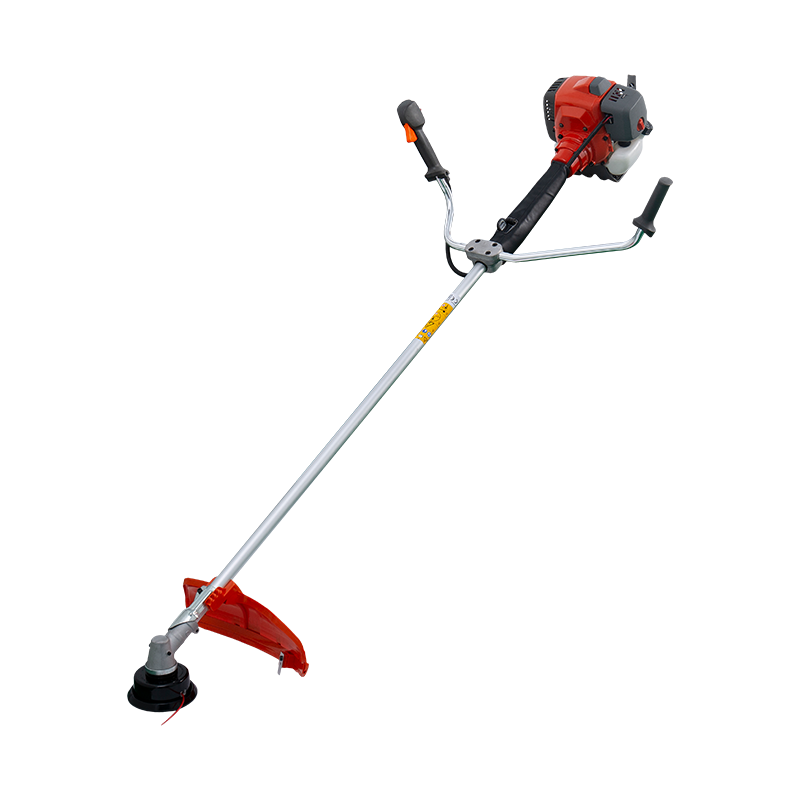
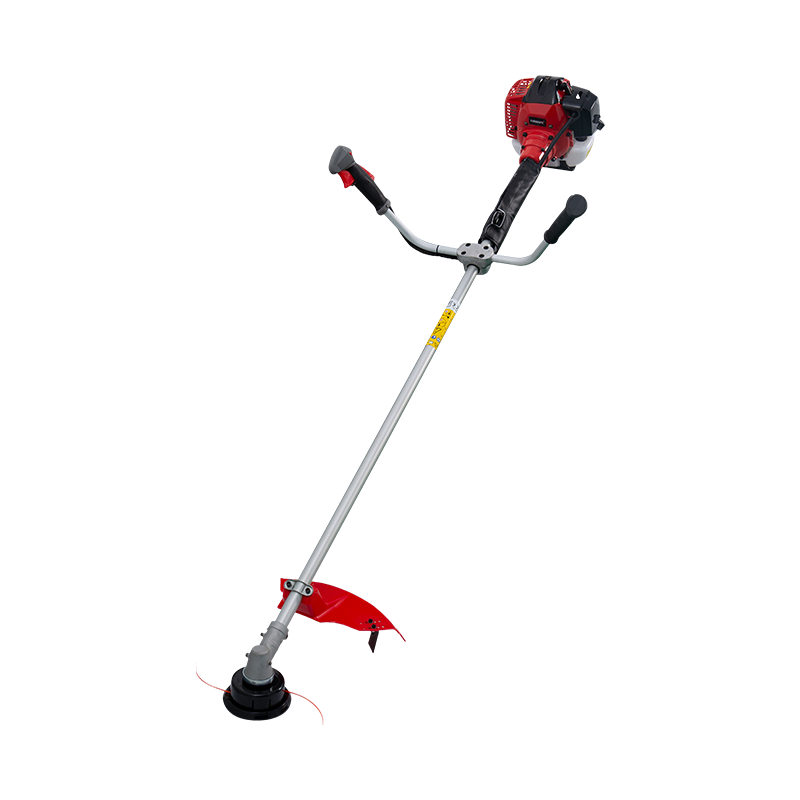
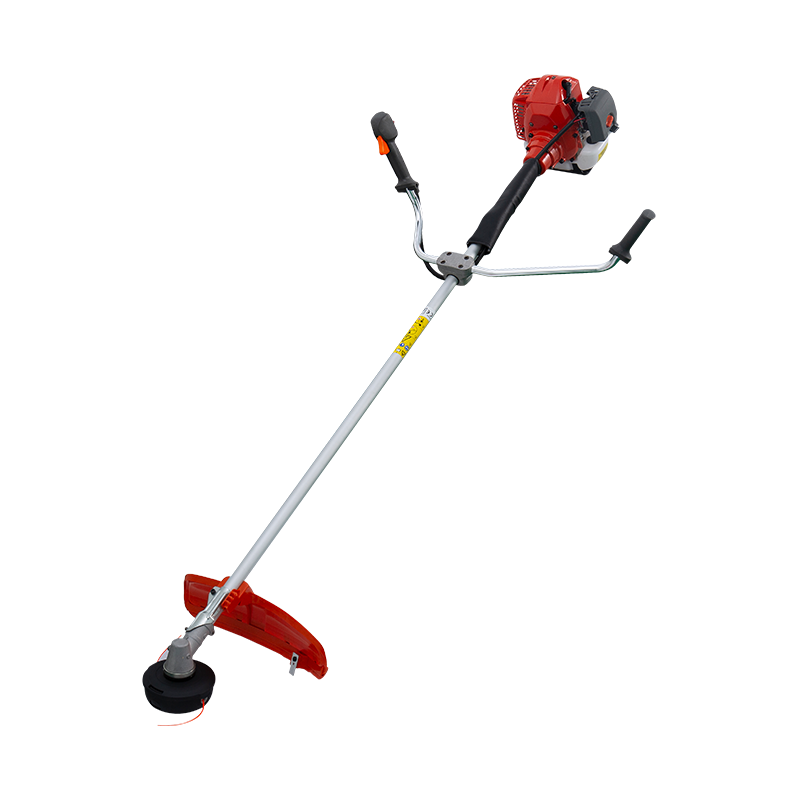
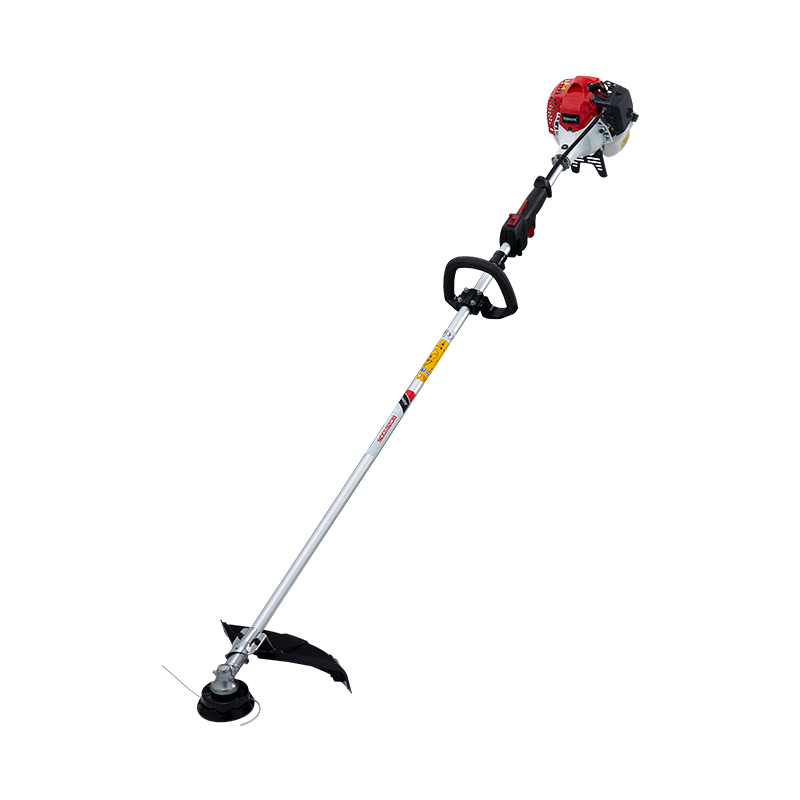
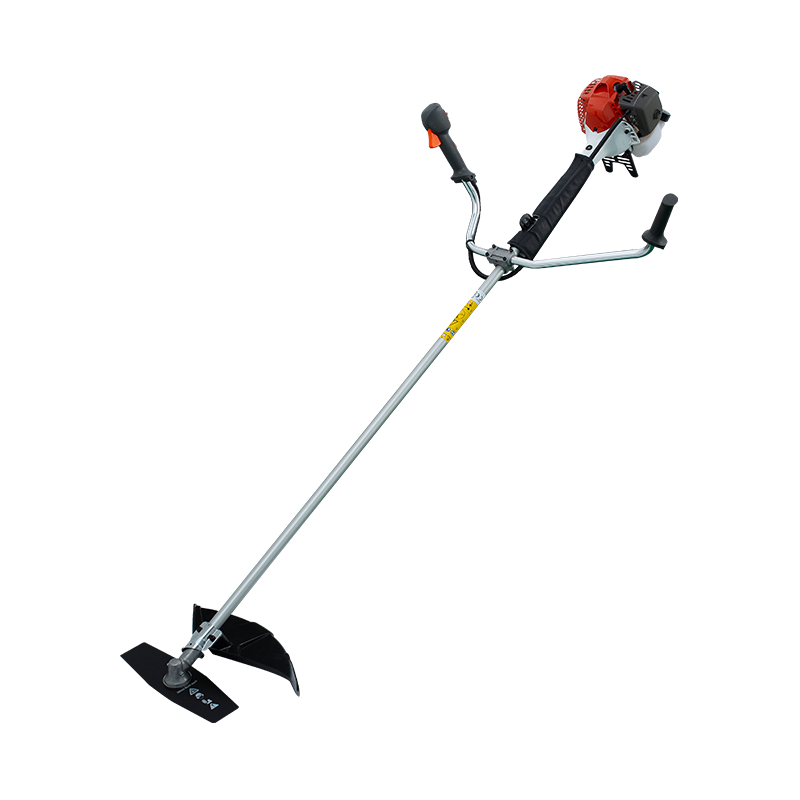
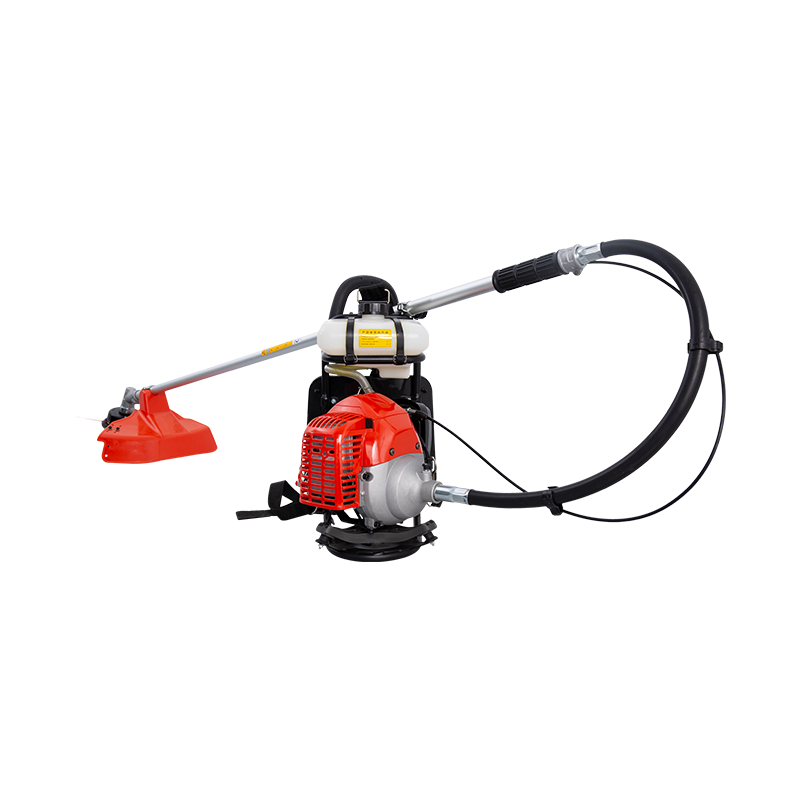
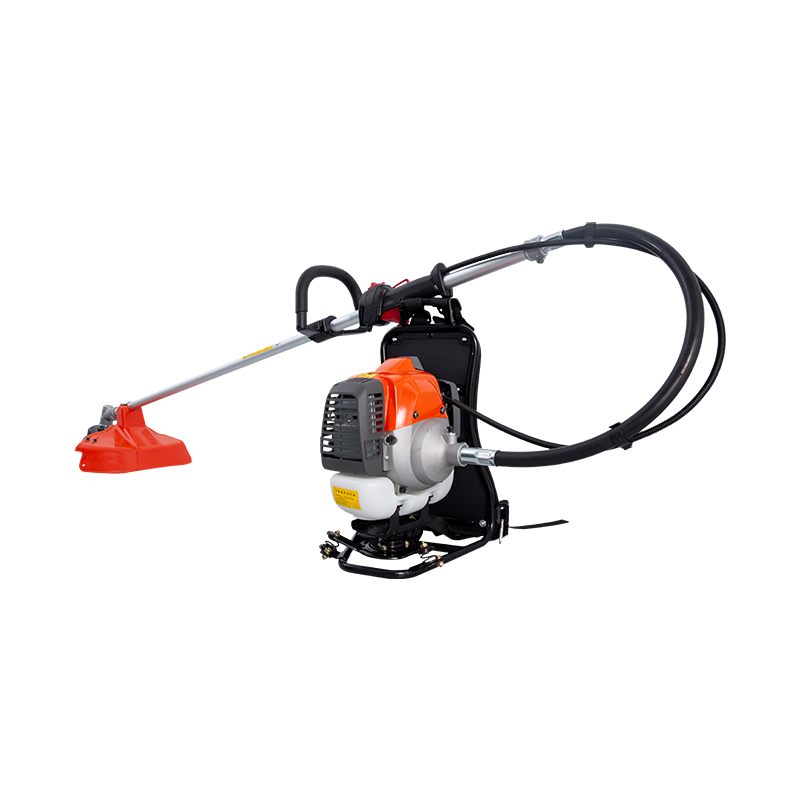
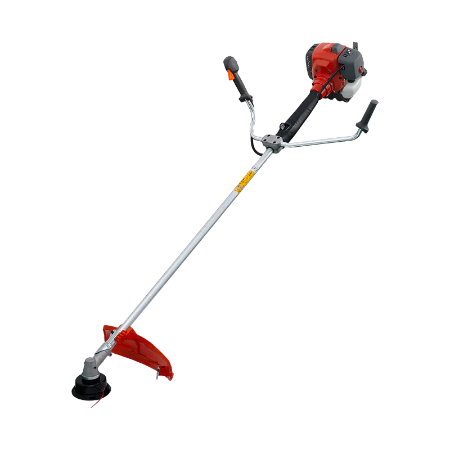
A handheld brush cutter is a two-cycle or four-cycle engine tool — or increasingly a battery-electric equivalent — fitted with a rigid blade, saw blade, or heavy-duty head rather than the nylon line of a standard string trimmer. Blade options include two-tooth and three-tooth grass blades for heavy grass and weeds, eight-tooth and 24-tooth brush blades for woody stems up to approximately 25 mm diameter, and circular saw blades for cutting saplings up to 50–75 mm at the base. The defining characteristic is operator control: the handheld brush cutter goes where the operator directs it, handling terrain, slopes, ditches, and vegetation-pattern irregularities that no tractor-mounted machine can navigate efficiently.
Engine displacement in commercial handheld brush cutters typically ranges from 25 cc to 52 cc, with professional-grade units at 40 cc and above providing the torque needed for dense brush and woody material without bogging under sustained load. Battery-electric units in the 56V to 80V range now match the sustained output of mid-range petrol units for most brush clearing tasks, with the tradeoff of runtime limits relevant to large-area work.
Tractor-Mounted Brush Cutter Attachments
At the machine scale, a brush cutter attachment — also called a brush hog, bush hog, or heavy-duty rotary cutter in North American usage — is a PTO-driven or hydraulically driven deck mounted to a tractor's three-point hitch or skid-steer quick attach. These machines use one or more free-swinging or fixed heavy steel blades rotating at high speed to cut brush, saplings, and light woody material up to 50–100 mm diameter depending on blade weight and PTO power. The free-swinging blade design is the key safety and functionality feature: when a blade strikes a rock, stump, or hidden obstacle, it swings back on its pivot rather than transmitting the full impact force to the gearbox and PTO shaft. This distinguishes brush cutter attachments from rigid-blade rotary cutters in terms of obstacle tolerance.
Flail Mower vs. Rotary Cutter: The Core Differences
The flail mower vs. rotary cutter comparison is the central decision for tractor operators managing pastures, roadsides, orchards, and overgrown fields. Both are PTO-driven cutting attachments; both handle material a finish mower cannot. The differences in cutting mechanism, safety profile, finish quality, and cost make each clearly superior in its target application.
How a Rotary Cutter Works
A rotary cutter (also called a slasher, gyro-mower, or rough-cut mower) operates on the same principle as a domestic rotary lawn mower scaled up to tractor dimensions. One, two, or three heavy steel blades rotate on a horizontal plane at high speed — typically 540 RPM PTO input driving blade tip speeds in the range of 60–90 m/s — cutting vegetation by impact and shear. The blade or blades are mounted on a central spindle or multiple spindles within a solid steel deck that contains the cutting zone.
Rotary cutters are the most cost-effective tool for cutting large areas of rank grass, weeds, and light brush quickly. A single-spindle rotary cutter with a 1.5 m cut width driven by a 40–60 PTO-horsepower tractor covers ground at 6–12 km/h in typical field conditions, making them exceptionally productive for straightforward pasture clearing and maintenance. Their limitations are equally clear: the high blade tip speed and open rear discharge create significant projectile risk from rocks and debris, cut material is shredded coarsely and can mat into windrows rather than distributing evenly, and the blades are damaged or destroyed by heavy rock strikes in rocky terrain.
How a Flail Mower Works
A flail mower uses a horizontal rotor spinning on a horizontal axis — perpendicular to the direction of travel — with multiple small blades (flails) mounted on pivot pins along the rotor's length. As the rotor spins, centrifugal force holds the flails extended, and they strike vegetation at high speed. When a flail contacts a rock or solid obstacle, it folds back on its pivot and passes over the obstacle rather than transmitting the full impact to the rotor shaft. After clearing the obstacle, centrifugal force returns the flail to its extended cutting position.
This mechanism produces several outcomes that differentiate flail mowers from rotary cutters in meaningful ways:
- Projectile containment — flail mowers are dramatically safer around bystanders, vehicles, buildings, and livestock than rotary cutters. The enclosed rotor design and lower discharge velocity mean cut material and any dislodged debris stay close to the machine rather than being thrown at high speed. This makes flail mowers the standard specification for roadside verge maintenance, orchard grass management, and any application near people or infrastructure.
- Mulching quality — the multiple flail strikes that each stem receives as it passes through the rotor zone produce a finer, more evenly distributed cut material than the single blade pass of a rotary cutter. Flail-cut grass and light brush is mulched to short lengths that decompose quickly on the surface rather than forming matted rows.
- Rocky terrain operation — flail mowers can work in stony fields, along fence lines with embedded rocks, and in terrain where a rotary cutter would destroy blades within a single pass.
- Finish quality on grass — a flail mower running at low rotor speed over established grass produces a finish closer to a rough-cut finish mower than a rotary cutter does, making it suitable for maintaining grass in orchards, vineyards, and amenity areas where appearance matters alongside weed control.
Where Rotary Cutters Remain the Better Choice
Despite the flail mower's versatility advantages, rotary cutters hold clear advantages in specific conditions. For cutting dense stands of brush and saplings up to 50–75 mm diameter — material that exceeds the capacity of most flail mowers — the heavy single blade of a rotary cutter delivers more raw cutting force per impact. Rotary cutters are also significantly lower in initial purchase cost: a quality single-spindle rotary cutter suitable for a 50 PTO-horsepower tractor costs approximately 30–50% less than a comparable-width flail mower. For large-acreage pasture management on clean ground with no rock hazard and no concern for finish quality or bystander safety, the rotary cutter's productivity and cost advantages are genuine.
Side-by-Side Comparison: Flail Mower vs. Rotary Cutter
| Factor | Flail Mower | Rotary Cutter |
|---|---|---|
| Cutting mechanism | Horizontal rotor with multiple pivoting flails | Horizontal rotating blade(s) on vertical spindle |
| Projectile risk | Low — enclosed rotor, low discharge velocity | High — open rear discharge, high blade tip speed |
| Rocky terrain suitability | Excellent — flails fold back on impact | Poor — blade damage or destruction on rock strike |
| Max stem diameter (typical) | 25–50 mm depending on model and power | 50–100 mm for heavy-duty models |
| Cut material finish | Finely mulched, evenly distributed | Coarsely cut, may mat or windrow |
| Roadside / near-infrastructure use | Standard specification | Generally unsuitable due to projectile risk |
| Orchard / vineyard use | Well suited — controllable finish, safe around trees | Generally unsuitable — projectile risk to tree bark and fruit |
| Relative purchase cost | Higher | Lower (30–50% less for equivalent width) |
| Maintenance focus | Individual flail replacement; rotor bearing inspection | Blade sharpening or replacement; spindle bearing inspection |
Tractor Power Matching and PTO Requirements
Matching the cutting attachment to the available tractor PTO horsepower is as important as the flail vs. rotary selection. An undersized tractor operating a cutting attachment at the limit of its PTO capacity will stall in dense material, overheat the transmission, and accumulate hours on the engine at high load factors that shorten overhaul intervals. An oversized tractor running a small attachment wastes fuel and limits productivity.
As a working guideline, rotary cutters require approximately 5–8 PTO horsepower per foot of cut width in average conditions — a 6-foot (1.8 m) rotary cutter needs 30–48 PTO-HP at minimum, with headroom to spare for dense material. Flail mowers require more power per unit width due to the higher rotor inertia and the energy cost of the mulching action: budget approximately 10–15 PTO horsepower per foot of cut width for flail mowers in heavy brush or tall grass conditions. A 1.5 m (5-foot) flail mower running in dense grass should have at least 50 PTO-HP available at the tractor, with 65–75 PTO-HP providing comfortable working margin.
PTO shaft speed also matters. Most rotary cutters and flail mowers are designed for 540 RPM PTO, which is standard on tractors up to approximately 100 engine horsepower. Heavy-duty commercial flail mowers designed for larger tractors may specify 1,000 RPM PTO. Running a 540 RPM machine from a 1,000 RPM PTO output — or vice versa — will destroy the gearbox within minutes; confirm PTO speed compatibility before purchasing any attachment.
Flail and Blade Maintenance: What Determines Useful Service Life
Cutting performance on both flail mowers and rotary cutters degrades progressively as blades and flails wear, and worn cutting edges force the machine to tear rather than cut vegetation — increasing power demand, reducing quality, and putting additional stress on the drivetrain. Establishing a maintenance rhythm based on actual wear rather than calendar intervals is the practical approach for machines used in varying terrain and vegetation density.
Rotary Cutter Blade Maintenance
Rotary cutter blades should be removed, inspected, and sharpened when the leading edge shows visible rounding or the machine requires noticeably more engine load to maintain forward speed in the same conditions as a previous pass. Blades are typically sharpened with an angle grinder to restore the original bevel angle — most manufacturers specify a 30–35° bevel on the cutting edge. Balance must be checked after sharpening; an unbalanced blade creates vibration that accelerates spindle bearing wear and can cause structural fatigue in the deck. Replace blades rather than re-sharpen when the blade has worn to less than the manufacturer's minimum thickness specification, typically marked by a wear indicator groove or dimension in the service manual.
Flail Mower Flail Replacement
Individual flails on a flail mower are replaced rather than sharpened in most designs — the flail body is a sacrificial wear component that is cheaper to replace than to recondition. The critical maintenance rule for flail rotors is always replace flails in matched pairs on opposite sides of the rotor to maintain rotor balance. An unbalanced rotor creates vibration proportional to the square of rotor speed, which can damage rotor bearings and the gearbox within a single operating season if ignored. Inspect flail pivot pins and carrier straps simultaneously with flail replacement — a worn pivot pin that allows excessive flail play causes the flail to strike the rotor drum rather than cutting cleanly, generating shock loads that accelerate rotor bearing wear.