English
 Español
Content
- 1 What Is a Side Pack Brush Cutter and Who Is It Built For?
- 2 How the Side Pack System Works: Drive Shaft, Power Unit, and Harness
- 3 Side Pack vs. Backpack vs. Conventional Brush Cutters: Which Configuration Fits Your Work?
- 4 Cutting Heads and Blade Selection for Side Pack Use
- 5 Vibration, Noise, and Health Compliance Considerations
- 6 Maintenance Priorities Specific to Side Pack Brush Cutters
- 7 What to Look for When Buying a Side Pack Brush Cutter
What Is a Side Pack Brush Cutter and Who Is It Built For?
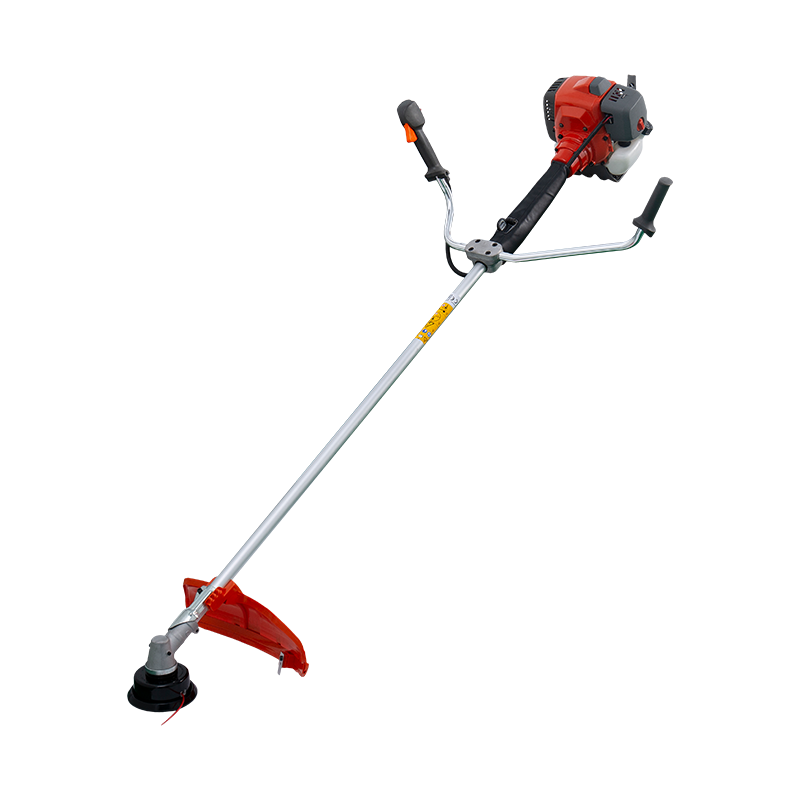
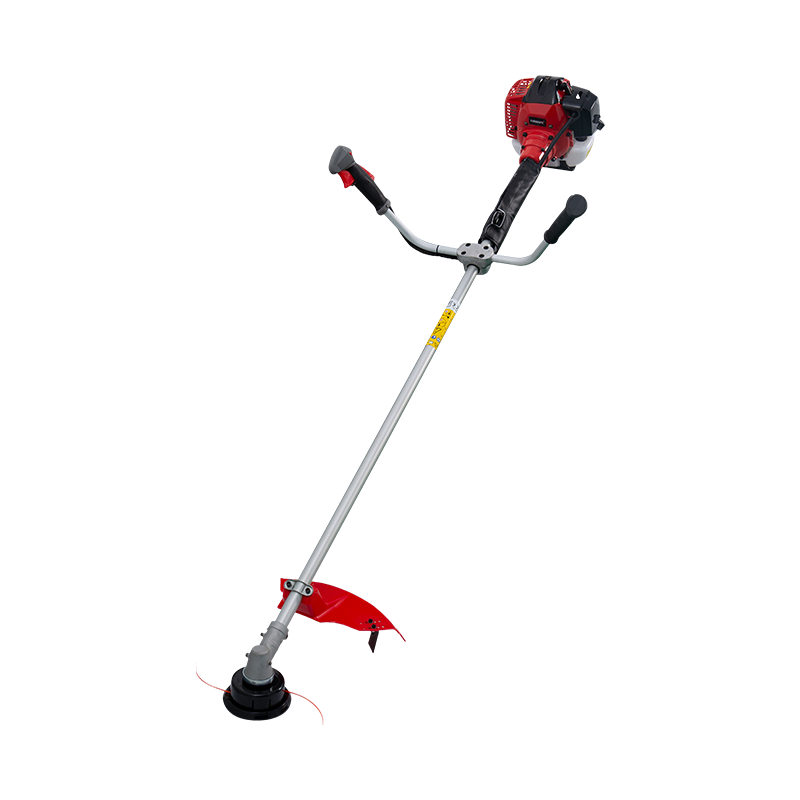
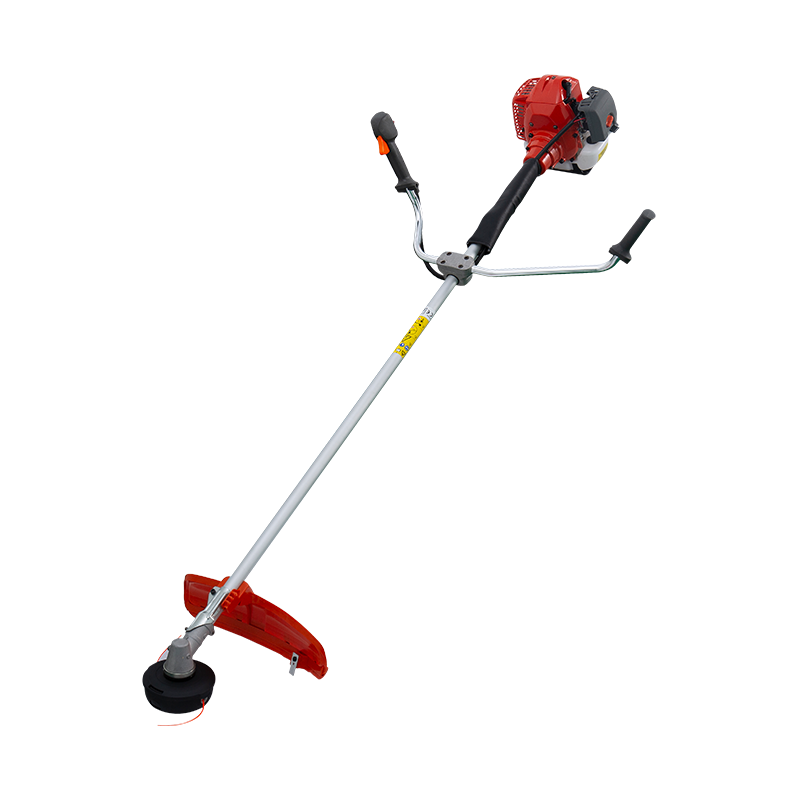
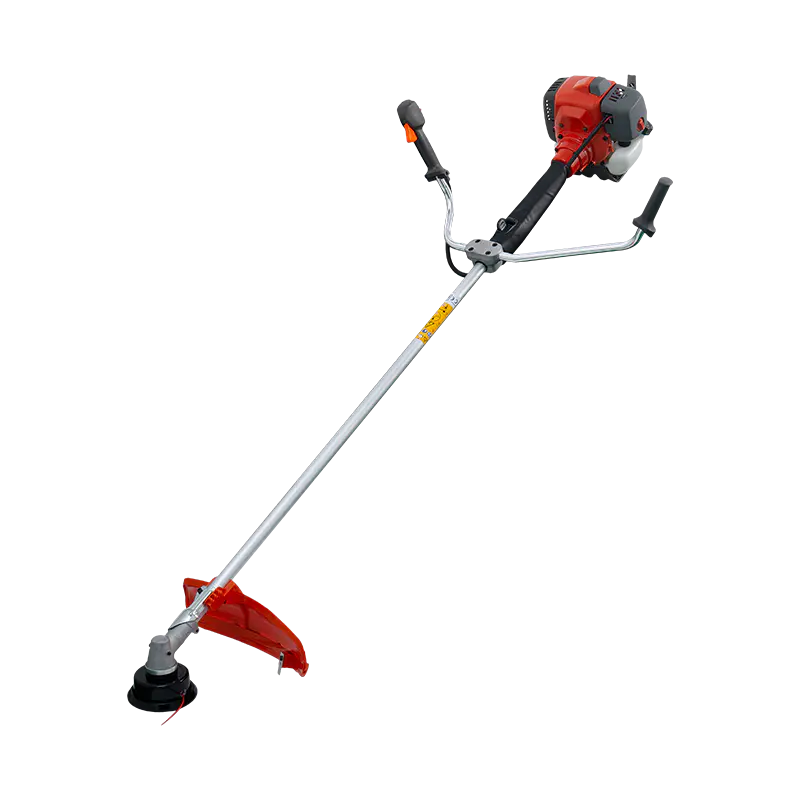
A side pack brush cutter is a type of powered clearing tool where the engine or power unit is carried in a harness pack worn on the operator's hip or side — rather than being mounted directly on the cutting shaft as in a conventional backpack or straight-shaft brush cutter. The cutting head is connected to the power unit via a flexible drive shaft, and the operator holds a separate handling tube that carries the cutting head without the weight of the engine attached to it.
This configuration solves a specific ergonomic problem that becomes significant during extended clearing operations: when the engine is mounted on the shaft, even a well-balanced brush cutter transfers engine vibration and weight directly to the operator's arms and shoulders throughout the cutting arc. The side pack arrangement removes the engine mass from the cutting tube entirely, leaving the operator holding only the shaft and cutting head — dramatically reducing arm fatigue and allowing longer continuous work periods before rest is needed.
The design is predominantly used by professional land clearers, forestry contractors, utility corridor maintenance crews, and agricultural workers who operate brush cutters for four to eight hours per day. Casual or occasional users rarely justify the higher cost and added complexity of the side pack configuration; its value proposition is specific to high-volume, extended-duration clearing where operator fatigue and vibration exposure are operational constraints, not just discomforts.
How the Side Pack System Works: Drive Shaft, Power Unit, and Harness
Understanding the mechanical architecture helps in evaluating specific products and diagnosing maintenance issues in the field.
The Flexible Drive Shaft
The cutting head is driven by a flexible cable shaft running inside a protective outer tube from the power unit at the hip to the gearbox at the cutting end. The flexibility of this shaft allows the operator to swing the cutting head in a wide arc without the rigid constraints of a solid-shaft machine — and it absorbs a portion of the torsional vibration that would otherwise travel up a solid shaft to the operator's hands. Flexible shaft condition is the primary maintenance variable in side pack systems: a worn, kinked, or under-lubricated drive shaft loses efficiency, generates heat, and eventually fails at the point of greatest flex angle. Regular inspection and periodic greasing per the manufacturer's interval are non-negotiable for reliable operation.
The Power Unit
Side pack power units are typically single-cylinder two-stroke or four-stroke petrol engines in the 25–60 cc displacement range, housed in a padded, impact-resistant casing that attaches to a hip or side harness. Two-stroke engines dominate because of their higher power-to-weight ratio and simpler maintenance, though four-stroke side pack units are available where emissions regulations or operator preference for reduced exhaust smell is a consideration. The power unit connects to the flexible shaft via a centrifugal clutch — the cutting head does not spin at idle, engaging only when the throttle is opened above idle speed.
The Harness System
The harness distributes the power unit's weight — typically 4–7 kg depending on engine size and fuel load — across the hip and lower torso rather than the shoulders. Padded hip belts, adjustable side straps, and quick-release buckles are standard features; the quality of the harness padding and the range of size adjustment directly affects comfort over a full work day. Some systems allow the pack to be positioned on either the left or right hip to suit the operator's dominant side and cutting style. Quick-release mechanisms are a safety requirement — in the event of a fall or entanglement, the operator must be able to separate from the power unit rapidly without tools.
Side Pack vs. Backpack vs. Conventional Brush Cutters: Which Configuration Fits Your Work?
The three main brush cutter configurations serve overlapping but distinct use cases. Choosing the wrong configuration for the job introduces avoidable fatigue, reduced productivity, or unnecessary cost.
Conventional Straight-Shaft Brush Cutter
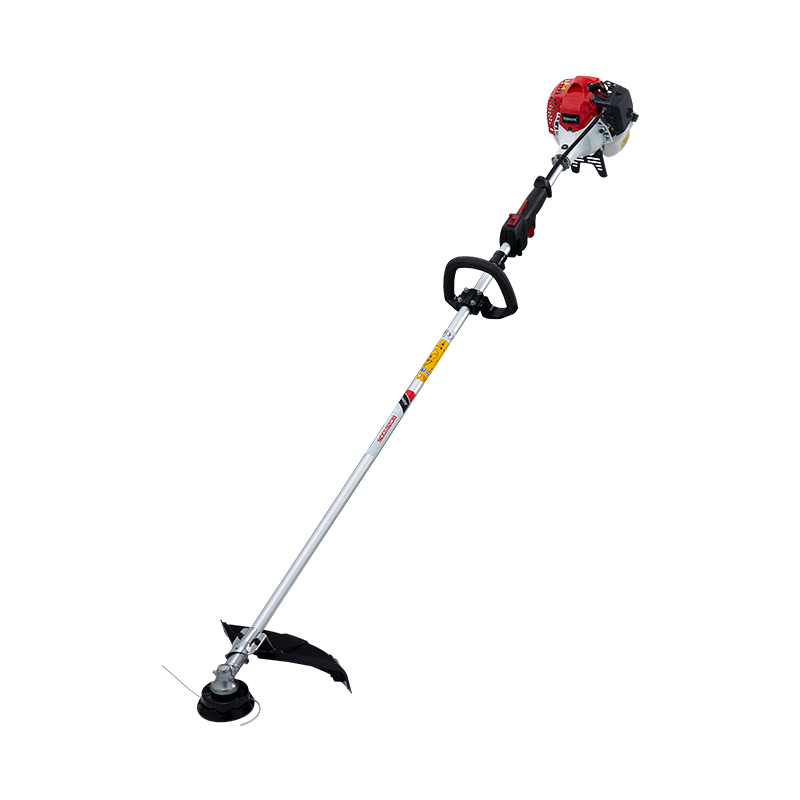
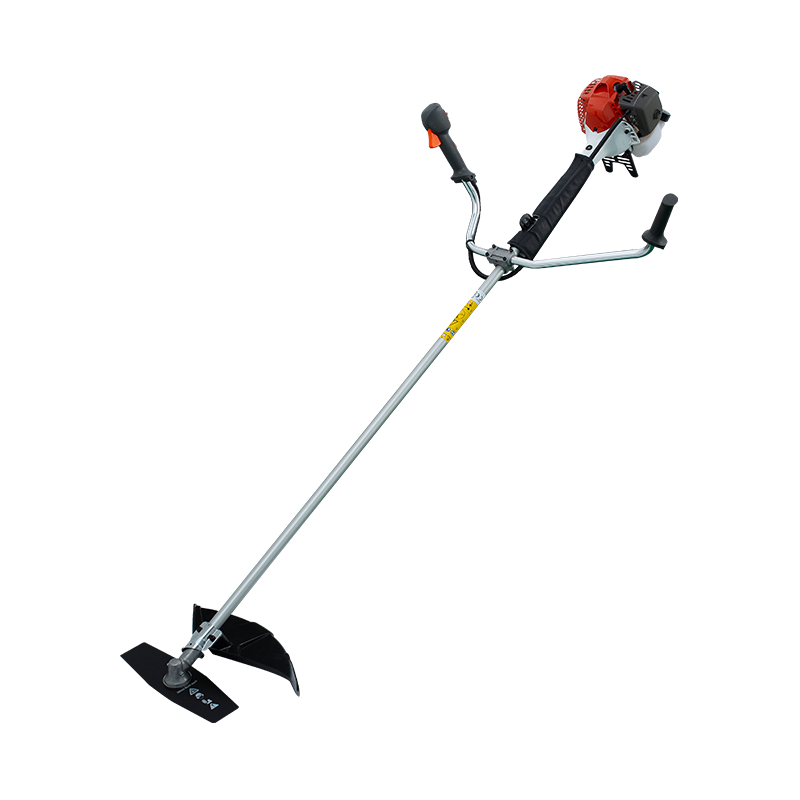
Engine mounted directly at the rear of a solid or flexible shaft, supported by a shoulder harness. The most common configuration globally, with the widest range of available models, accessories, and service networks. Best suited for work periods under three hours, varied terrain where the operator moves frequently between tasks, and mixed cutting (grass, light brush, edges). Vibration and weight transfer to the arms is the limiting factor for extended use — EU Directive 2002/44/EC establishes daily vibration exposure action and limit values that many conventional brush cutters reach within two to four hours of continuous operation.
Backpack Brush Cutter
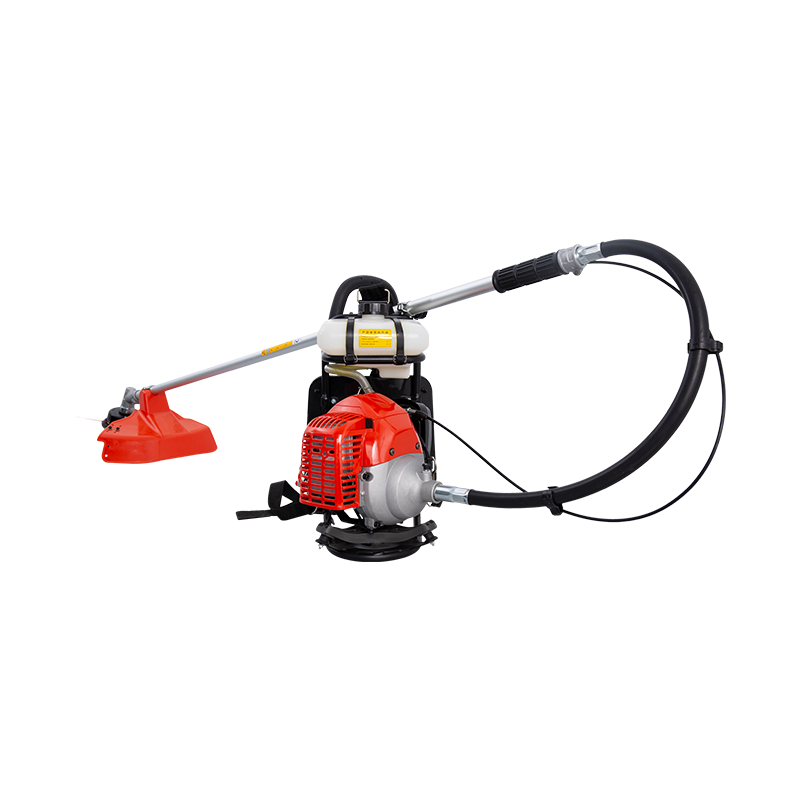
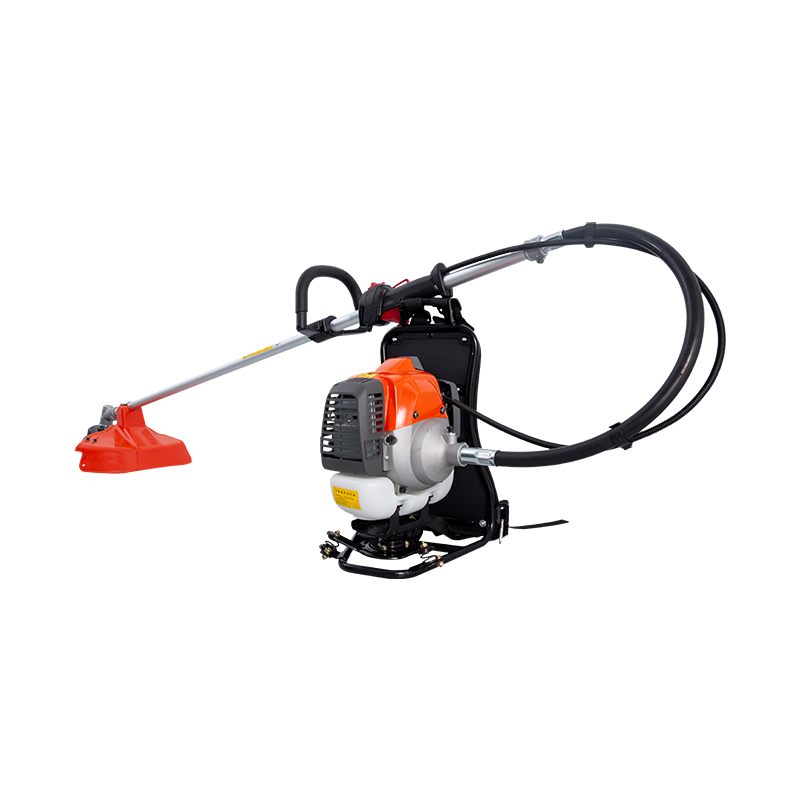
Engine carried in a framed backpack, connected to the cutting shaft via a flexible drive. Distributes weight across the back and shoulders rather than concentrating it on the arms. Better for extended use than conventional models but less comfortable than side pack in hot climates — the engine pack against the operator's back generates significant body heat. The backpack format generally allows larger engine displacements (up to 75+ cc) than side pack units, making it the preferred choice for very heavy brush and light sapling clearing where maximum power is the priority.
Side Pack Brush Cutter
Engine at the hip, off the operator's back. The ergonomic optimum for all-day clearing in moderate-density brush where cutting head maneuverability and operator endurance both matter. Lower vibration transmission to the hands than conventional units, better heat management than backpack units in warm weather, and a lower center of gravity that improves stability on slopes. The tradeoff is higher unit cost, a more complex drivetrain requiring more attention to flexible shaft maintenance, and a narrower range of available engine sizes compared to conventional models.
| Configuration | Weight on Arms | Heat on Body | Typical Engine Range | Best For |
|---|---|---|---|---|
| Conventional Shaft | High | Low | 22–52 cc | Short sessions, mixed tasks |
| Backpack | Low | High | 36–75 cc | Heavy brush, cool climates |
| Side Pack | Very Low | Low–Moderate | 25–52 cc | All-day professional clearing |
Cutting Heads and Blade Selection for Side Pack Use
The side pack configuration is compatible with the same range of cutting heads and blades used on conventional brush cutters with the appropriate gearbox attachment. Selection depends on vegetation density, species, and the clearing objective.
- Nylon line heads: For grass, soft weeds, and light vegetation up to pencil thickness. Multiple line configurations (two-line, four-line, spiral wound) are available. Appropriate where obstacles are frequent and blade contact with rocks or posts would be hazardous. Lower cutting efficiency in dense or woody brush but safe around fence lines and structures.
- Three-tooth metal blade (grass blade): For tougher grass, reed beds, and light brush up to finger thickness. The most common blade upgrade from nylon line for professional operators. Robust and easily resharpened; if a tooth contacts a rock, individual tooth damage is typically repairable without replacing the full blade.
- Eight-tooth or multi-tooth metal blade: For woody brush, brambles, and shrubs up to 20–30 mm stem diameter. More aggressive cutting with greater risk of kickback on contact with solid obstacles — operator experience and proper PPE are essential. The standard choice for dense scrub clearance and undergrowth management.
- Circular saw blade (tungsten-tipped or chisel tooth): For saplings and woody regrowth up to 80–100 mm diameter. The most aggressive cutting head available for brush cutters; requires full chainsaw-equivalent PPE (cut-resistant trousers, visor, gloves) and is not appropriate for inexperienced operators. Side pack units with appropriate engine displacement and gearbox ratios handle these blades well because the operator can maneuver the cutting head more freely without the engine mass on the shaft.
- Plastic blade systems: Fixed or flexible plastic blades for domestic grass cutting near obstacles where nylon line wear is excessive. Not suitable for professional or heavy vegetation clearing.
Blade arbor compatibility must be verified against the gearbox specification before fitting any blade. The M10 × 1.25 LH (left-hand thread) standard is common across many European and Asian brush cutter manufacturers, but arbor diameter and boss configuration vary — always cross-reference the blade center hole dimensions and intended rotation direction with the specific gearbox model.
Vibration, Noise, and Health Compliance Considerations
For professional operators and employers, vibration and noise exposure are regulated health and safety parameters, not just comfort factors. Side pack brush cutters are specifically engineered to reduce these exposures, and understanding the relevant limits helps in evaluating whether a given model delivers meaningful protection.
Hand-arm vibration (HAV) is the primary occupational health concern associated with brush cutter use. Prolonged daily exposure above the EU action value of 2.5 m/s² A(8) requires employers to implement health surveillance and equipment controls; exposure above the limit value of 5.0 m/s² A(8) is prohibited. Conventional brush cutters commonly produce vibration levels of 4–8 m/s² at the handles under working conditions, limiting compliant daily use to two to three hours for some models. Well-designed side pack brush cutters with anti-vibration isolated handles can reduce handle vibration to 1.5–3.0 m/s² — extending compliant operating time significantly and reducing the cumulative vibration dose for operators who use the equipment daily over a working career.
Noise exposure at the operator's ear typically ranges from 95–108 dB(A) for petrol brush cutters. Hearing protection is mandatory for professional use regardless of configuration — the side pack design does not meaningfully alter noise exposure at the operator's ear since the cutting head (the primary noise source) remains at the same position relative to the operator as in any other configuration.
Maintenance Priorities Specific to Side Pack Brush Cutters
Side pack brush cutters share most maintenance requirements with conventional models — air filter cleaning, spark plug inspection, fuel system care, gearbox grease — but the flexible drive shaft introduces a maintenance item with no equivalent on solid-shaft machines.
- Flexible shaft lubrication: The inner drive cable requires periodic greasing according to the manufacturer's schedule — typically every 25–50 operating hours or at least once per season. Access usually requires disconnecting the shaft from both the power unit and gearbox ends. Under-greased flexible shafts develop heat buildup at high-flex-angle points, accelerating wire fatigue and ultimately causing cable failure. Use only the recommended grease type — standard lithium grease is typically specified, but some manufacturers require a specific product for shaft longevity.
- Flexible shaft inspection: At each greasing interval, visually inspect the outer sheath for kinks, cracks, or abrasion wear, and feel for any stiff or rough spots in the inner cable that might indicate wire strand breakage. A kinked outer sheath that forces the cable into a tight bend at a single point will fail at that location under operating loads — replace the shaft assembly before failure occurs in the field.
- Gearbox grease: The bevel gearbox at the cutting head end should be repacked with the specified grease every 25 hours of use. Running the gearbox low on grease causes rapid gear wear and bearing failure — a disproportionately expensive repair relative to the cost of a grease cartridge.
- Harness hardware inspection: Quick-release buckles, load-bearing strap attachment points, and hip belt hardware should be inspected at the start of each season and after any drop or impact. A failed quick-release mechanism is a safety hazard; replace harness components showing cracking, deformation, or stiff buckle action before returning the unit to service.
- Connection couplings: The couplings joining the flexible shaft to the power unit output and to the gearbox input are wear points — inspect for play, wear on splined interfaces, and secure engagement at each seasonal service.
What to Look for When Buying a Side Pack Brush Cutter
The side pack category is smaller and less commoditized than the conventional brush cutter market, which means fewer options and a wider spread of quality between brands. These are the evaluation criteria that distinguish a professional-grade unit from a budget model with professional-grade marketing.
- Engine displacement and power output: Match to your primary cutting task. A 26–33 cc unit handles grass and light brush; 36–52 cc is appropriate for dense scrub and woody regrowth. Avoid undersized engines — running a brush cutter at or near maximum load continuously reduces engine life significantly.
- Published vibration data: Reputable manufacturers publish handle vibration values tested to ISO 11806. Request these values and compare against the EU action and limit values for the expected daily use duration. If a manufacturer cannot provide measured vibration data, treat the product with skepticism.
- Flexible shaft quality and replacement cost: Ask for the part number and cost of a replacement flexible shaft assembly before purchasing. A side pack unit with an expensive or difficult-to-source flexible shaft becomes a liability if that component fails between seasons. Established brands with wide dealer networks typically have better parts availability than OEM-branded imports.
- Harness fit range: Confirm the harness adjusts to fit the operator's body size. Hip belt sizing that doesn't fit correctly transfers load incorrectly and defeats the ergonomic benefit of the side pack design. Some manufacturers offer small and large harness options separately from the power unit.
- Cutting head and blade compatibility: Verify that the gearbox output is compatible with standard blade arbors and common cutting head brands — proprietary attachment systems that require manufacturer-specific blades and heads limit your options and typically increase consumable costs.
- Service network and warranty: For professional equipment used daily, local dealer service availability matters more than initial price. A one-year parts-and-labor warranty backed by a dealer network within a day's travel is worth more in practice than a two-year warranty from a supplier with no local service capability.