English
 Español
Content
Bush Cutter Machines: Types, Power Sources, and How to Choose the Right One
A bush cutter machine — also called a brush cutter or brushcutter — is a powered cutting tool designed to clear vegetation that a standard lawn mower cannot handle: thick grass, weeds, scrub, saplings, and undergrowth up to several centimeters in diameter. Where a mower requires a flat, obstacle-free surface, a bush cutter operates on slopes, ditches, forest edges, and rough terrain where wheel-mounted equipment cannot go.
The category spans an enormous range of machines — from handheld units weighing under 5 kg to tractor-mounted flail mowers clearing several meters per pass. Understanding the distinctions between them is the starting point for any purchase or rental decision.
Power Source Comparison
Petrol (gasoline) engine bush cutters deliver the highest power-to-weight ratio and are fully independent of power infrastructure, making them the preferred choice for professional use and remote sites. Two-stroke engines dominate the handheld segment due to their lighter weight; four-stroke engines appear in heavier units and offer better fuel economy and lower emissions. Engine displacement in handheld petrol models typically ranges from 25cc to 50cc, with professional models at the upper end producing 2.0–3.5 kW.
Battery-powered (cordless) bush cutters have advanced significantly with brushless motor technology and high-capacity lithium-ion battery platforms. Current professional-grade 36V–80V systems match the performance of entry-level petrol models for most domestic and light commercial tasks, with run times of 30–75 minutes per charge depending on load. The key advantages — zero emissions, low noise, instant start, and reduced vibration — have made battery units the fastest-growing segment of the market.
Corded electric bush cutters suit domestic users with access to mains power and small to medium plots. They are the lightest and cheapest option but are limited by cable length (typically 30–50 m with an extension) and are unsuitable for wet conditions or remote terrain.
Cutting Attachment Types
The cutting head determines what a bush cutter machine can tackle:
- Nylon line head: For grass and soft weeds up to approximately 10mm stem diameter. Low risk of kickback from solid objects. Suitable for domestic use and trimming around obstacles.
- Plastic blade (star/Y-blade): Handles thicker grass and light brush. Safer than metal blades in stony terrain as the blades flex on impact rather than shattering or throwing debris.
- Metal 3-tooth or 4-tooth blade: The standard professional choice for thick grass, coarse weeds, and woody stems up to approximately 20mm. Requires full PPE and a clear working zone.
- Metal circular saw blade (8T–80T): For saplings and woody shrubs up to approximately 80–100mm in diameter, depending on tooth count and blade thickness. High-risk attachment; professional use only.
- Brush knife / brush saw: A thick, heavy-duty blade for dense scrub and bramble clearing. Highest cutting capacity; requires significant operator experience.
4-Wheeler Brush Cutters: Ride-On and ATV-Mounted Clearing Equipment
A 4-wheeler brush cutter refers to any ride-on or vehicle-mounted cutting system designed for large-scale vegetation clearing — a category that includes dedicated walk-behind four-wheel brush cutters, ride-on out-front mowers, ATV-mounted deck cutters, and tractor PTO-driven flail or disc mowers. The common thread is that all four wheels support the cutting system, distributing weight and enabling stable operation on rough ground that would destabilize a conventional rider mower.
Self-Propelled Four-Wheel Brush Cutters
Walk-behind four-wheeled brush cutters — sometimes called self-propelled brush mowers — are purpose-built for clearing areas too rough and overgrown for a ride-on tractor but too large for handheld equipment to cover efficiently. They are typically powered by 6–15 kW engines, feature all-wheel drive for traction on slopes, and use heavy-duty horizontal disc, flail, or swinging blade cutting systems that can process vegetation up to 4–5 cm in diameter.
Common applications include orchard row clearing, roadside and embankment maintenance, overgrown paddock reclamation, and forestry undergrowth control. Cutting widths on self-propelled units typically range from 60 cm to 100 cm. Key specifications to evaluate include maximum slope capability (professional units operate safely on gradients up to 45°), blade or flail type, and whether a mulching or side-discharge chute is included.
ATV and UTV-Mounted Brush Cutters
Hydraulic or PTO-driven brush cutter decks mounted to the front or rear of an ATV or UTV extend the reach of existing farm vehicles into vegetation clearing work. Front-mounted decks offer better operator visibility; rear-mounted options are simpler to install and better suited to flatter terrain. Most ATV brush cutter attachments require the host vehicle's engine output of at least 15–25 HP and hydraulic capacity of 8–18 GPM to drive the cutting head at adequate blade tip speed.
The practical advantage of ATV-mounted systems is the ability to convert a multi-purpose vehicle into a brush cutter when needed, then remove the attachment for other tasks. The limitation is that ATV-mounted decks generally have lower blade tip speeds and cutting capacity than dedicated purpose-built machines of equivalent engine displacement.
Tractor-Mounted and Out-Front Ride-On Units
For commercial-scale clearing — roadsides, large paddocks, utility corridors — tractor PTO-driven flail mowers and out-front rotary cutters deliver the highest productivity. A mid-range tractor flail mower operating at 1.8–2.5 m cutting width can clear 2–4 hectares per hour on manageable vegetation. These units are not typically described as "brush cutters" in commercial contexts but represent the upper end of the same functional category.
How to Use a Brushcutter: Technique, Safety, and Maintenance
Understanding how to use a brushcutter correctly — not just how to start it — is the difference between efficient, safe operation and premature equipment failure or serious injury. Brushcutters are among the highest-injury-rate garden power tools; the combination of high blade speed, proximity to the operator, and debris projection demands that technique and safety protocols be treated as non-negotiable.
Personal Protective Equipment (PPE)
Before starting any brushcutter, the following PPE is required — not recommended:
- Face shield or visor: Debris — stones, wire fragments, cut stems — is projected at high velocity. Safety glasses alone are insufficient when using metal blades.
- Hearing protection: Petrol brushcutters typically operate at 95–108 dB(A) at the operator's ear. Sustained exposure above 85 dB causes permanent hearing damage. Use earmuffs or earplugs rated to at least 25 dB SNR.
- Gloves: Anti-vibration gloves reduce white finger risk (Hand-Arm Vibration Syndrome) from prolonged use.
- Protective trousers or chaps: Cut-resistant leg protection (to EN 381-5 or equivalent) is mandatory when using metal blades near the legs.
- Steel-capped boots: Essential when using metal blade attachments.
- High-visibility vest: Required when working on or near public roads.
Correct Cutting Technique
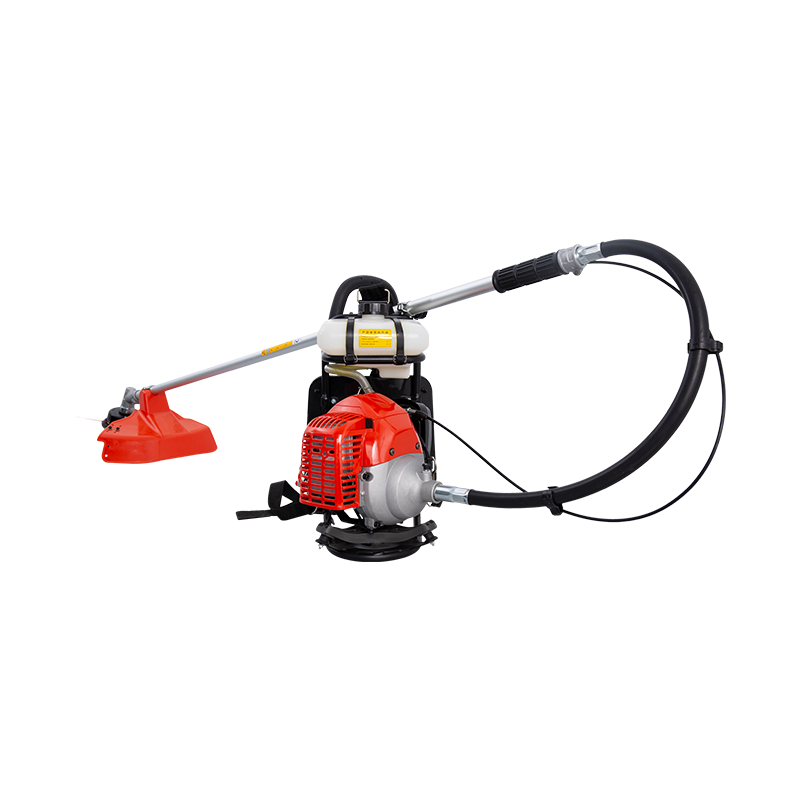
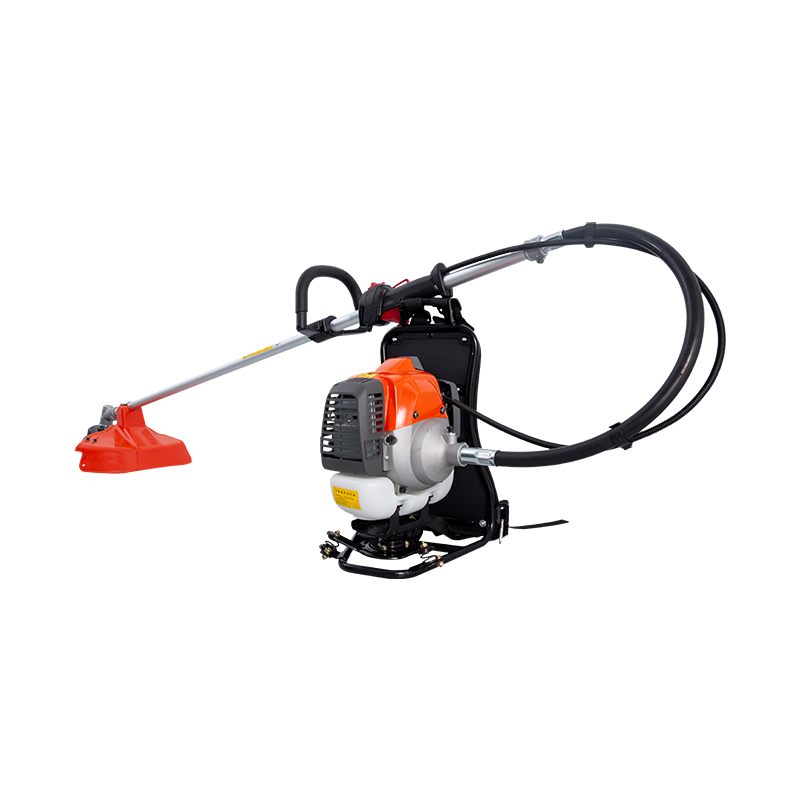
The harness is not optional equipment — it is the primary means of controlling the tool safely. Adjust the harness so the cutting head sits parallel to the ground when the operator is in a natural standing posture. The tool should feel balanced and nearly weightless; carrying the weight in your hands and wrists rather than the harness causes fatigue, reduced control, and vibration injury.
The correct cutting motion depends on the task:
- Sweeping (for open grass and weeds): Swing the cutting head from right to left in a controlled arc, cutting on the left-to-center sweep (the direction debris is thrown away from the operator). Return on the right sweep without throttle. Advance forward by one cutting-width per sweep.
- Scything (for heavy growth): Work the cutting head slowly into thick vegetation rather than forcing it through at full swing. Rushing causes the blade to bind, engine to bog, and increases kickback risk.
- On slopes: Always cut across slopes rather than up or down them. Position the tool so debris is thrown away from you and downhill. Never operate with the cutting head above waist height.
- Exclusion zone: Maintain a minimum 15-metre exclusion zone from bystanders when using metal blades. No exceptions.
Routine Maintenance
Most brushcutter failures are maintenance failures. A simple routine after each use extends service life significantly:
- Clean the cutting head: Remove packed grass and resin from the blade, blade guard, and gearhead housing. Resin buildup on metal blades causes vibration imbalance and accelerates gearbox wear.
- Inspect the blade: Check for cracks, nicks, or missing material. A cracked blade must be replaced immediately — do not continue operating.
- Gearhead grease: The angular gearbox at the cutting head requires fresh grease every 25 operating hours. Most manufacturers provide a grease nipple; use the specified lithium complex grease, not general-purpose grease.
- Air filter: Clean or replace every 10–25 hours depending on dusty conditions. A clogged filter causes rich running, power loss, and accelerated cylinder wear.
- Spark plug: Inspect every 50 hours; replace annually on petrol units or when electrode gap exceeds the manufacturer's specification.
Handheld Brush Cutters: Selection, Ergonomics, and Best Use Cases
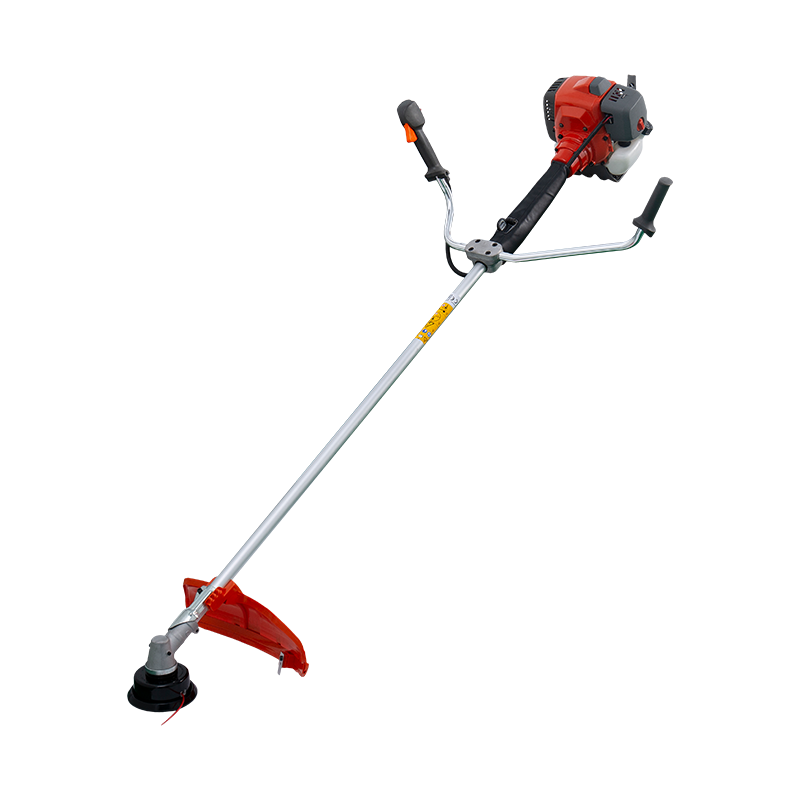
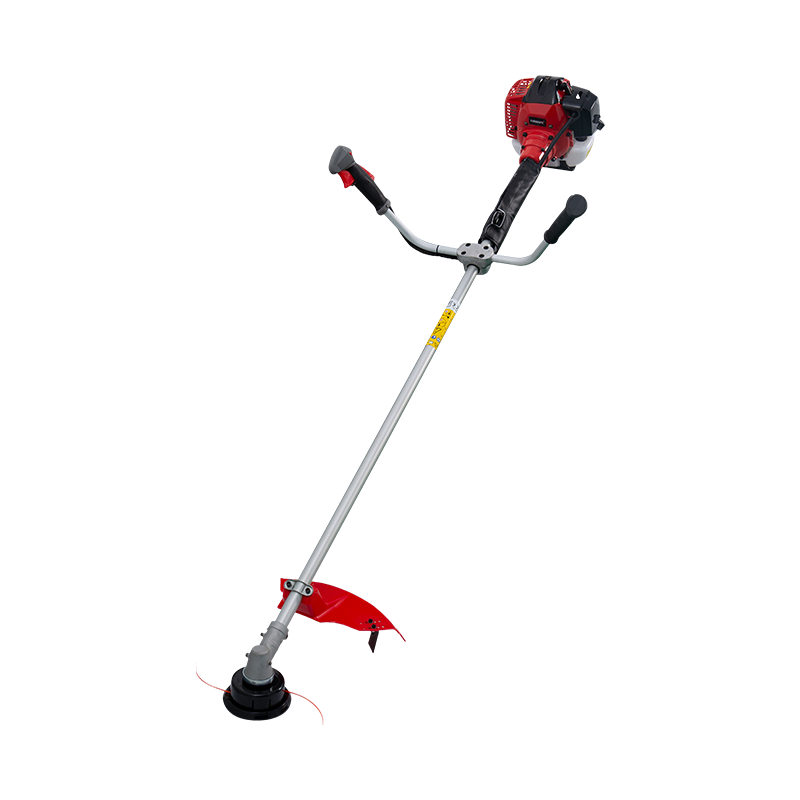
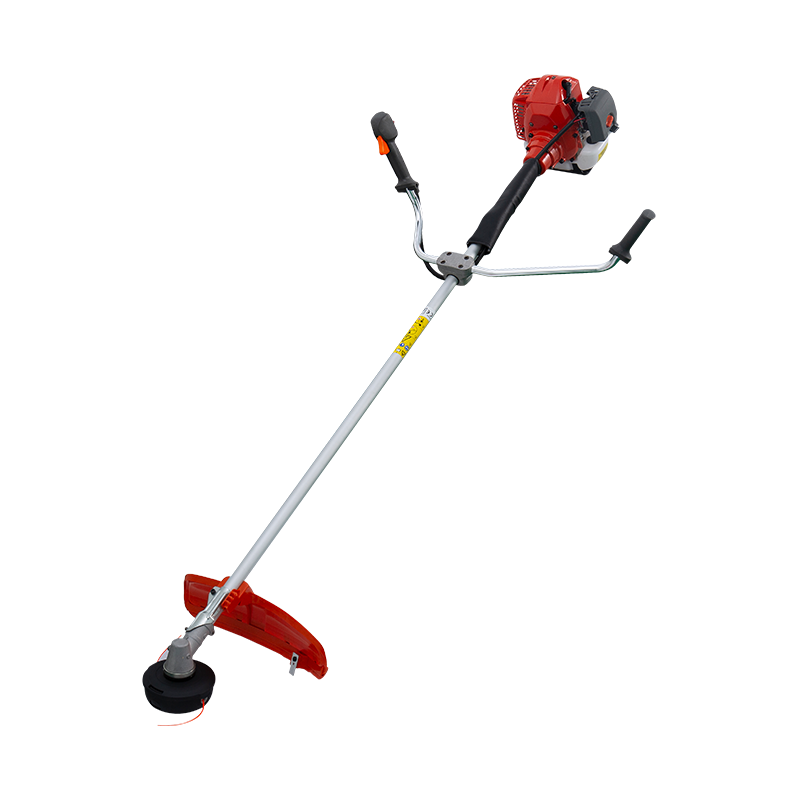
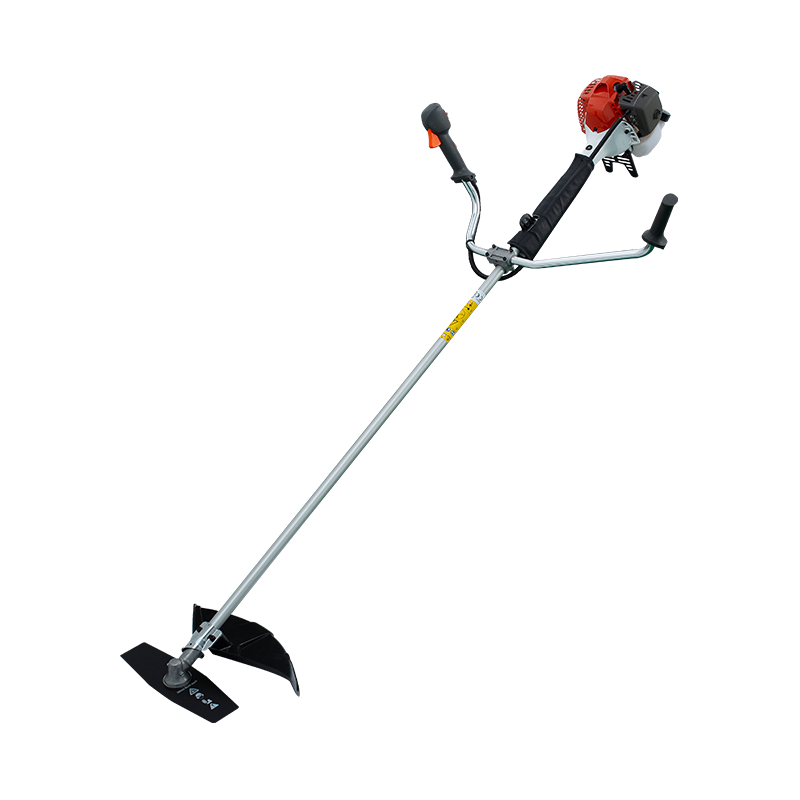
A handheld brush cutter is the most versatile and widely used form of the machine — a single operator carries and controls the entire cutting system via a shaft assembly fitted with a harness. The simplicity of the concept conceals a significant range of quality and capability across the product category. Choosing correctly requires matching the machine's specification to the actual workload, not to the highest or lowest price point.
Straight Shaft vs. Curved Shaft
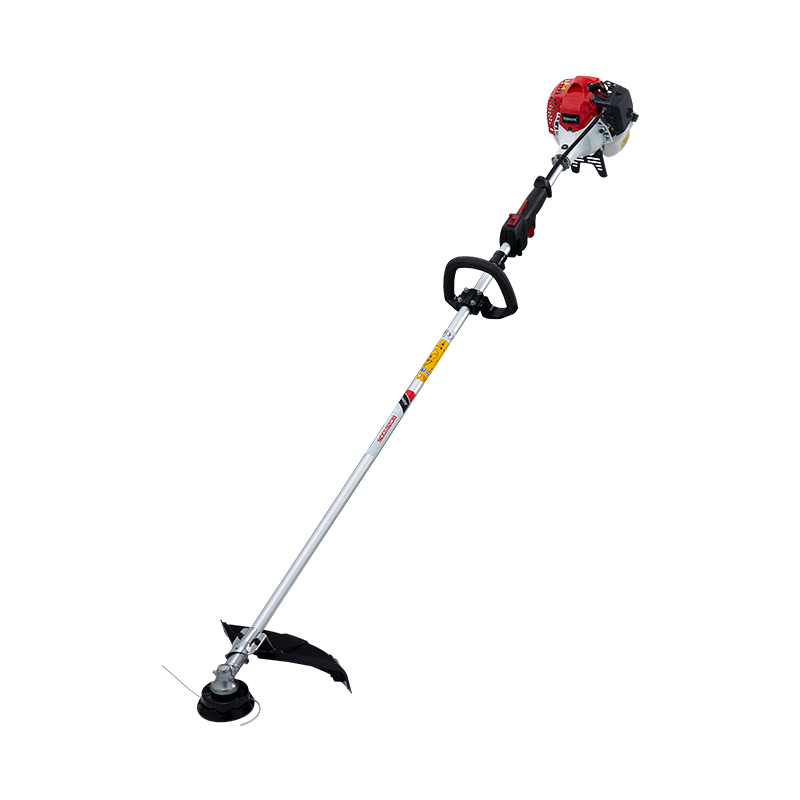
The shaft geometry is one of the first decisions in specifying a handheld unit. Straight-shaft brushcutters use a solid or flexible drive cable running the full length of the shaft and are compatible with the full range of cutting attachments — including metal blades, which require the rigid, direct power transmission a straight shaft provides. They reach further under obstacles, balance more naturally on a harness, and are the professional standard. Curved-shaft models are lighter and easier to maneuver in tight spaces but are limited to nylon line heads and light plastic blades due to the geometry of the flexible cable drive. They suit domestic users maintaining a garden edge or small plot.
Single Handle vs. Two-Handle (Loop and Bicycle)
Handheld brushcutters come with either a single D-handle at the rear — for one-handed control in confined spaces — or a two-handle bar (loop or bicycle bar) for two-handed operation during wide sweeping cuts. The two-handle configuration offers significantly better control and reduces operator fatigue during sustained work. Professional operators almost universally prefer the bicycle (T-bar) grip for open clearing work, reserving single-handle units for trimming and detail work around fences and trees.
Key Specifications for Handheld Selection
| Use Case | Recommended Engine / Power | Typical Weight | Suggested Attachment |
|---|---|---|---|
| Domestic lawn edging and light weeds | 25–30cc / 18–36V battery | 4–5 kg | Nylon line head |
| Semi-professional / thick grass and scrub | 33–40cc / 56–80V battery | 5–7 kg | 3-tooth or 4-tooth metal blade |
| Professional / dense brush and saplings | 43–52cc petrol | 7–10 kg | Circular saw blade / brush knife |
| Municipal / forestry undergrowth | 50cc+ petrol | 8–12 kg | Heavy brush saw blade |
Anti-Vibration Systems and Long-Term Health
Vibration is the most underappreciated specification in handheld brushcutter selection. Hand-Arm Vibration Syndrome (HAVS) — a progressive, irreversible condition causing tingling, numbness, reduced grip strength, and blanching of the fingers — is an occupational disease with well-documented links to prolonged brushcutter use. The EU Physical Agents Directive sets a daily vibration exposure action value of 2.5 m/s² and a limit value of 5 m/s². Many entry-level brushcutters exceed 6–8 m/s² at the handle, meaning safe daily exposure times can be as short as 30–45 minutes.
Professional-grade machines use anti-vibration (AV) mounts — rubber-isolated handle assemblies that decouple the operator's hands from the engine and blade vibration. The measured AV values on quality machines typically fall below 4 m/s², doubling or tripling safe daily exposure time. For any operator using a brushcutter more than one hour per day, AV specification is not a premium feature — it is a health requirement.