English
 Español
Content
- 1 Matching the Brush Cutter to the Job: Power, Blade, and Design
- 2 What Size Brush Cutter Do I Need? Engine Displacement and the Overgrowth Factor
- 3 What Is the Best Brush Cutter for Overgrown Grass and Heavy Weeds?
- 4 How to Choose a Brush Cutter for Rough Terrain and Large Areas
- 5 The Practical Selection Checklist: Blade, Harness, and Shaft
Matching the Brush Cutter to the Job: Power, Blade, and Design
Selecting a brush cutter for thick, overgrown vegetation is different from picking a string trimmer for lawn edging. A brush cutter for thick weeds and brush needs enough engine displacement to spin a heavy metal blade without bogging down, the right blade type to shear through woody stalks rather than wrap them around a spool, and a harness system that transfers the weight to your shoulders so you can work for hours. A string trimmer adapted with a brush blade often lacks the torque and the shaft strength to do the job safely; it vibrates, stalls, and can kick back dangerously. The right tool is purpose-built.
When you look for how to choose a brush cutter for thick grass, the core decision tree runs through three branches: the power source and engine size, the cutting head and blade configuration, and the handle and harness design that determines fatigue and control on difficult ground. Overgrown grass, saplings, brambles, and rocky terrain each push a different variable to the limit. Understanding which variable matters most for your land is the fastest route to a cutter that clears the ground without wearing out the operator.
What Size Brush Cutter Do I Need? Engine Displacement and the Overgrowth Factor
The question what size brush cutter do i need is best answered by the thickest, toughest stem you intend to cut. Engine displacement, measured in cubic centimeters (cc), directly dictates the cutter's torque and its ability to swing a heavy blade through a dense clump without losing RPM. A small 25–30 cc engine with a line head may clear annual grasses and light weeds, but it stalls or overheats when asked to cut through fibrous stems thicker than a pencil. A brush cutter for thick grass that has already gone woody, or a mix of grass, brambles, and saplings, demands a minimum of 35 cc. For persistent heavy brush, a 40–50 cc professional-grade engine is the standard.
| Vegetation & Terrain | Min. Engine (cc) | Recommended Blade | Notes |
|---|---|---|---|
| Tall annual grass, soft weeds, flat ground | 25–30 cc | Line head, 3-tooth plastic blade | Lightweight, limited to non-woody stems |
| Thick overgrown grass, mixed weeds, gentle slopes | 35–40 cc | 3- or 4-tooth metal blade, shredder blade | Cuts stems up to ~15 mm, wider swath |
| Brambles, saplings, woody brush, uneven ground | 40–50+ cc | Chisel-tooth circular saw blade, tri-blade | High torque required; anti-kickback design essential |
| Stony, rocky rough terrain — any vegetation | 35–50 cc | Shredder blade, swing-back flail blades | Blade must absorb impact; avoid rigid saw blades |
What Is the Best Brush Cutter for Overgrown Grass and Heavy Weeds?
For land that has been left a full season — tall fescue, cocksfoot, mixed thistles, and brambles up to waist height — the best brush cutter for overgrown grass is a 40 cc-class straight-shaft machine with a shredder blade. The straight shaft transfers engine power to the cutting head with a solid steel drive shaft inside a rigid tube, eliminating the flex-shaft lag that curses curved-shaft trimmers. A shredder blade, which looks like a blunt-edged disc with multiple small teeth or a scalloped perimeter, does not slice individual stems so much as pulverize vegetation into small fragments that drop rather than wrap. At full throttle, it creates a wide, clean swath through material that would stall a line head in seconds.
When you ask which brush cutter is best for heavy weeds, consider the cutting attachment more than the engine alone. Heavy, succulent weeds like hogweed or large docks have thick, hollow stems that can jam under a thin blade. A four-tooth metal blade with large gullets clears the cut material quickly and resists clogging. For a mix of heavy weeds and woody brush, a chisel-tooth circular saw blade with a limited number of deep-cutting teeth — often 40 to 80 teeth on an 8- or 10-inch disc — works efficiently. The trade-off is that saw blades are more likely to kick back on contact with hard objects like hidden rocks or wire, so they demand a full shoulder harness and a handlebar design that gives you maximum leverage. The best brush cutter for uneven ground combines a high-torque engine with a blade that can absorb an accidental strike without shattering — a shredder or a swing-back flail design rather than a rigid chisel tooth.
How to Choose a Brush Cutter for Rough Terrain and Large Areas
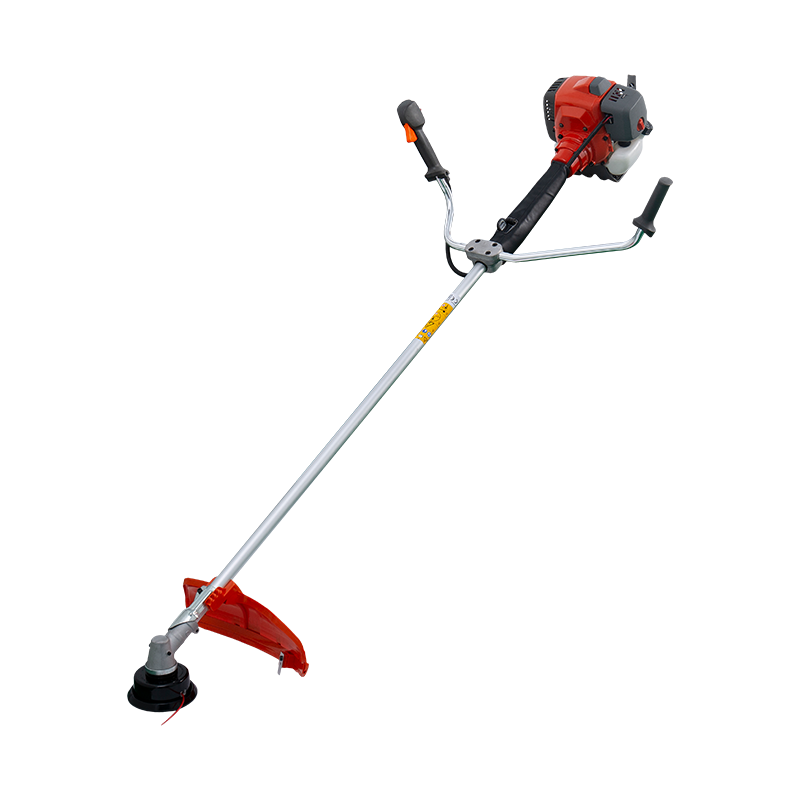
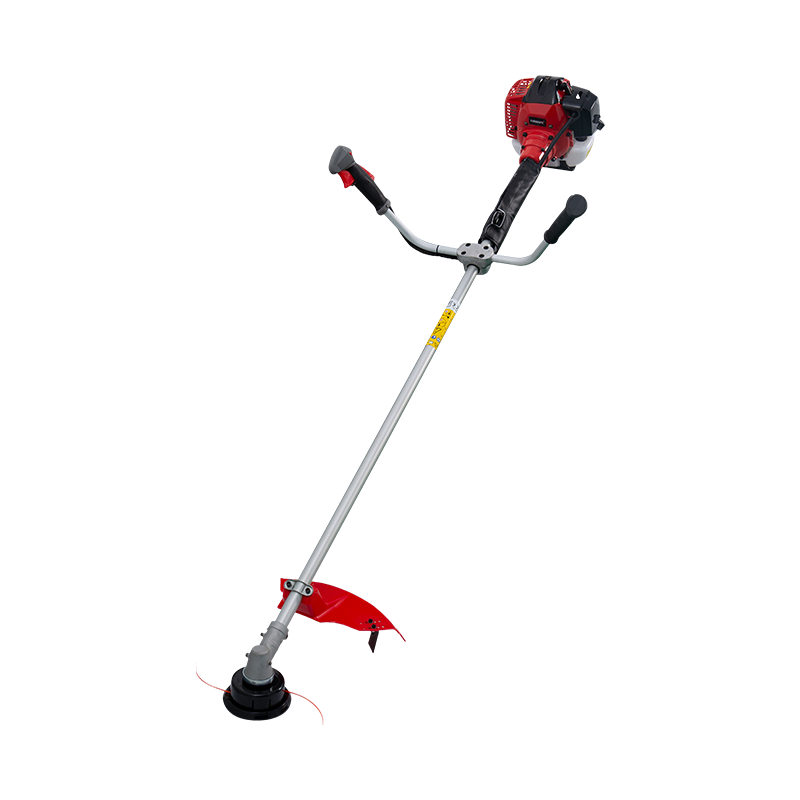
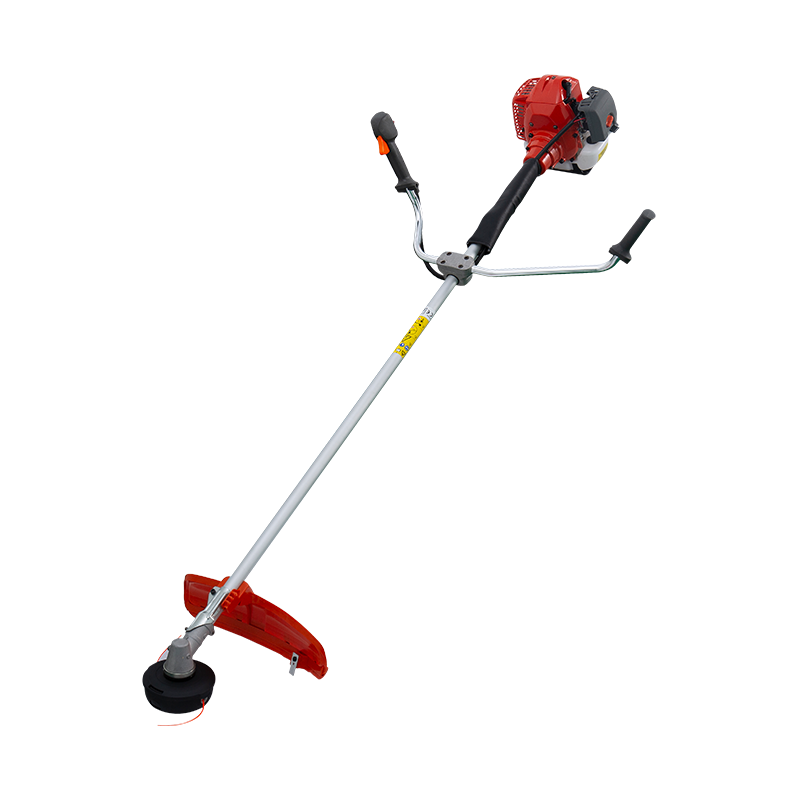
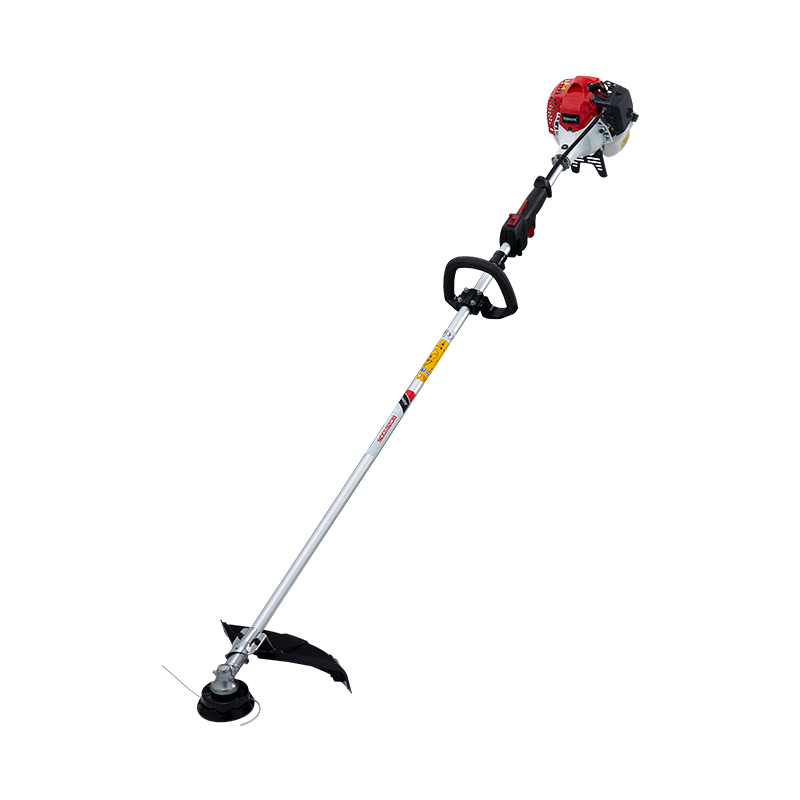
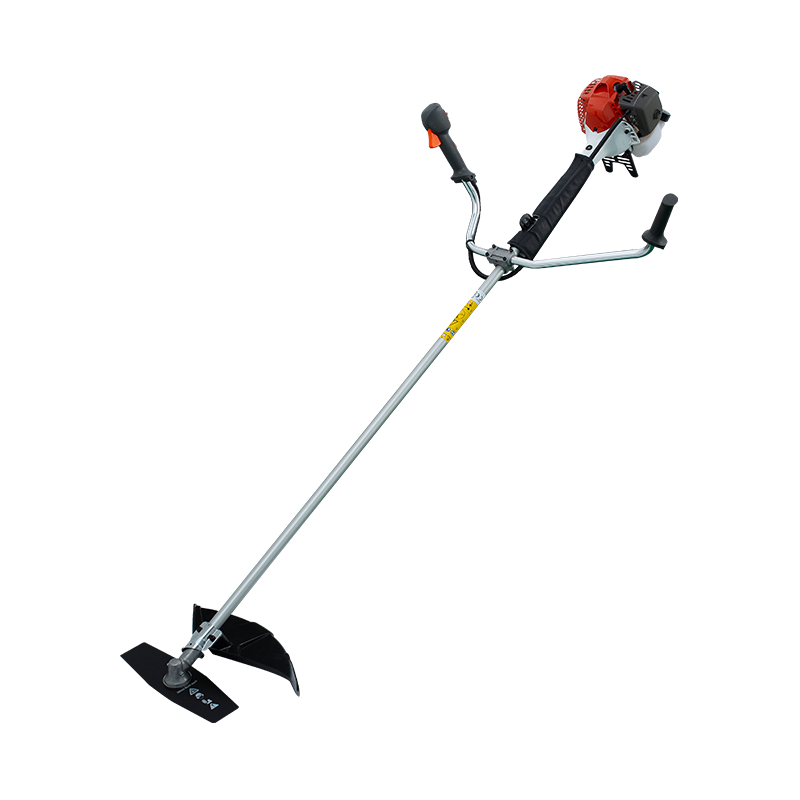
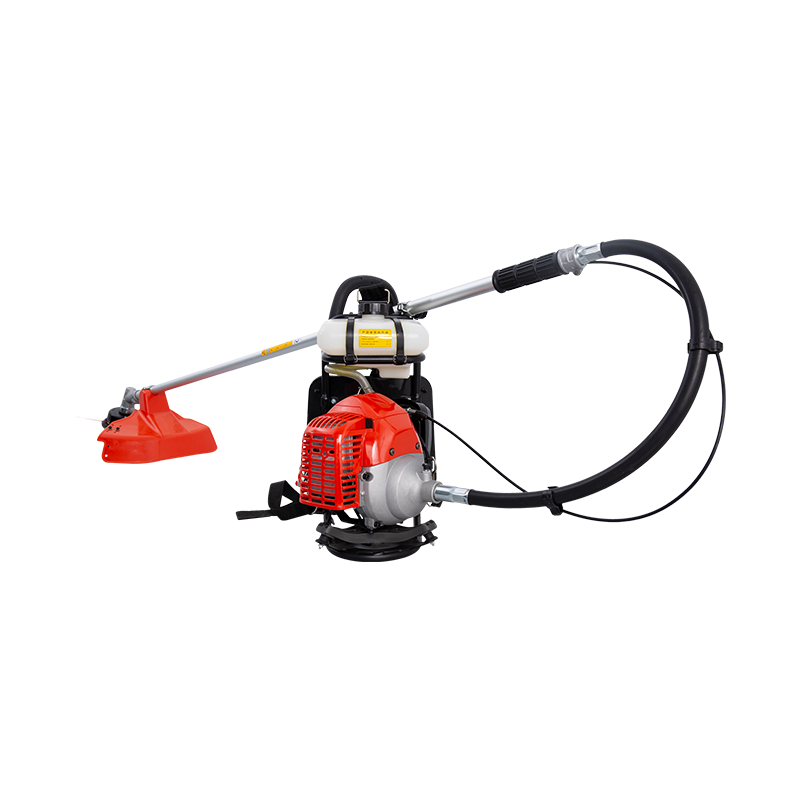
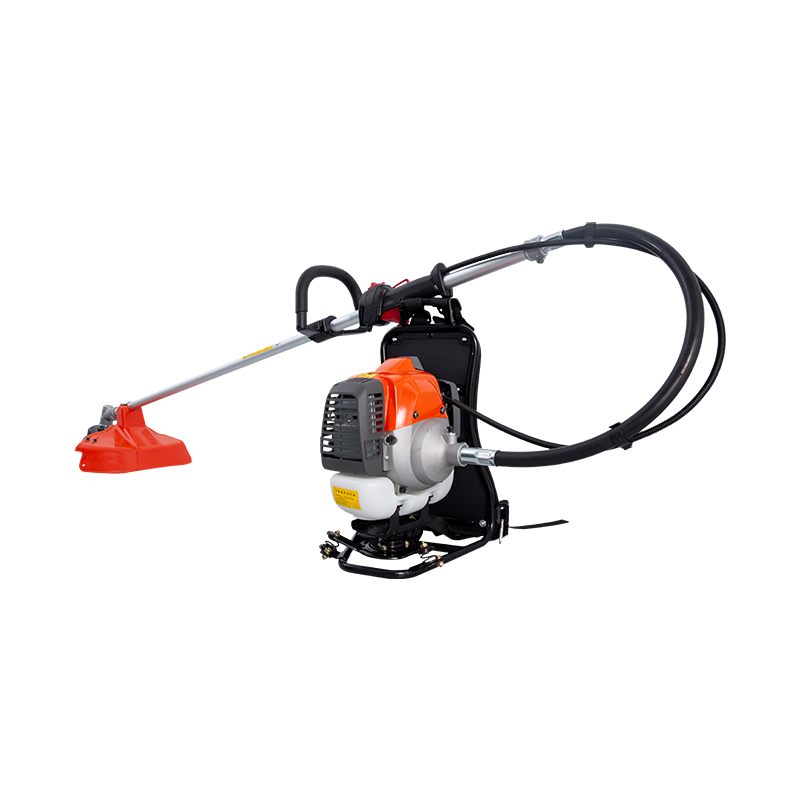
Choosing how to choose a brush cutter for rough terrain starts with the handles and the harness. A loop handle — the standard on lightweight trimmers — gives poor leverage on a slope and forces the operator to carry the full weight of the machine on their arms. Within an hour, fatigue leads to poor control and an increased risk of the blade hitting rocks. A brush cutter for thick weeds and brush on rough, uneven ground needs a wide U-handle or a bicycle-handlebar configuration, paired with a full chest and shoulder harness. This transfers the cutter's weight to the torso and allows the operator to sweep the blade in a controlled arc by rotating the hips rather than wrestling with the arms. On slopes, a harness with a quick-release mechanism is a safety requirement, allowing the operator to drop the machine instantly if they slip.
For a brush cutter for large areas, fuel capacity and vibration damping become non-negotiable. A small 30 cc engine with a 0.5-liter fuel tank will need refueling every 40 minutes, breaking the work rhythm across a multi-acre clearing. Professional-grade brush cutters in the 45–50 cc range often carry a 0.9 to 1.2-liter tank and feature anti-vibration mounts between the engine and the shaft. The reduction in vibration measurably delays the onset of hand-arm vibration syndrome, a debilitating condition recognized by occupational health authorities. A comfortable, balanced machine with a wide-diameter harness pad makes it possible to work a six-hour day without the numbness that forces a stop. On large, uneven tracts, the combination of a wide handlebar, a heavy-duty harness, and a large fuel tank matters as much as the engine displacement.
The Practical Selection Checklist: Blade, Harness, and Shaft
After settling on an engine class, the final selection of what is the best brush cutter for overgrown grass on your specific property comes down to three physical attributes that directly affect safety and endurance:
- Straight shaft only for blades. A curved shaft uses a flexible cable drive that can whip and break under the load of a metal blade hitting a sapling. A straight shaft uses a solid steel drive shaft that withstands the torque. If you plan to use anything other than a line head, the straight shaft is non-negotiable.
- Blade selection by terrain type. On stony or rocky soil where the blade will strike hidden obstacles, a swing-back flail blade or a shredder blade absorbs impact rather than shattering. On clean, deep soil with thick woody stems, a chisel-tooth circular saw blade cuts fastest. Match the blade to the worst hazard in the cutting zone, not to the vegetation alone.
- Harness and handlebar configuration. A single shoulder strap is adequate for line trimming on flat lawns. For uneven ground and heavy brush, a full double-shoulder harness with a wide back pad and a quick-release clip is the minimum safe setup. U-handles or bullhorn bars provide the leverage to sweep the blade through thick stalks without pulling your body off balance.
When you stand in a supply yard weighing up how to choose a brush cutter for rough terrain, lift the machine and wear the harness before you buy. A cutter that feels nose-heavy or vibrates hard through the grips at idle will be exhausting after the first tank of fuel. The right machine balances near the hip, allows a full, natural swing arc, and leaves your hands free of the tingling that signals excessive vibration. Combined with the correct blade, it will clear overgrowth that would stop a lesser tool — and do it day after day.