English
 Español
Content
- 1 Brush Cutter Types and How to Match Them to Your Terrain
- 2 Brush Cutter Walk Behind: Precision on Slopes and Tight Spaces
- 3 Brush Cutter Mower: Ride-On Power for Mid-Scale Properties
- 4 Towable Grass Cutter: High-Acreage Efficiency Behind a Tractor or ATV
- 5 Mower Brush Cutter Combinations: Versatility for Mixed Vegetation
- 6 Land Clearing Brush Cutter: Machines for Heavy Overgrowth and Acreage Reclamation
- 7 Brush Cutter for UTV: Expanding Capability Without a Tractor
Brush Cutter Types and How to Match Them to Your Terrain
A brush cutter is a heavy-duty cutting machine designed to clear vegetation that standard lawn mowers cannot handle — dense brush, saplings up to 2–3 inches in diameter, tall weeds, briars, and overgrown field grass. Unlike a standard rotary mower, brush cutters use hardened steel blades, heavy-duty flail hammers, or reinforced cutting heads capable of processing woody stems without stalling or sustaining damage.
The right machine depends on the scale of the job, the type of vegetation, the terrain slope, and whether you already own a tractor, UTV, or skid steer. The six most practical formats — walk-behind, mower-style, towable, combination mower brush cutter, land clearing, and UTV-mounted — each occupy a distinct niche in the brush management toolkit.
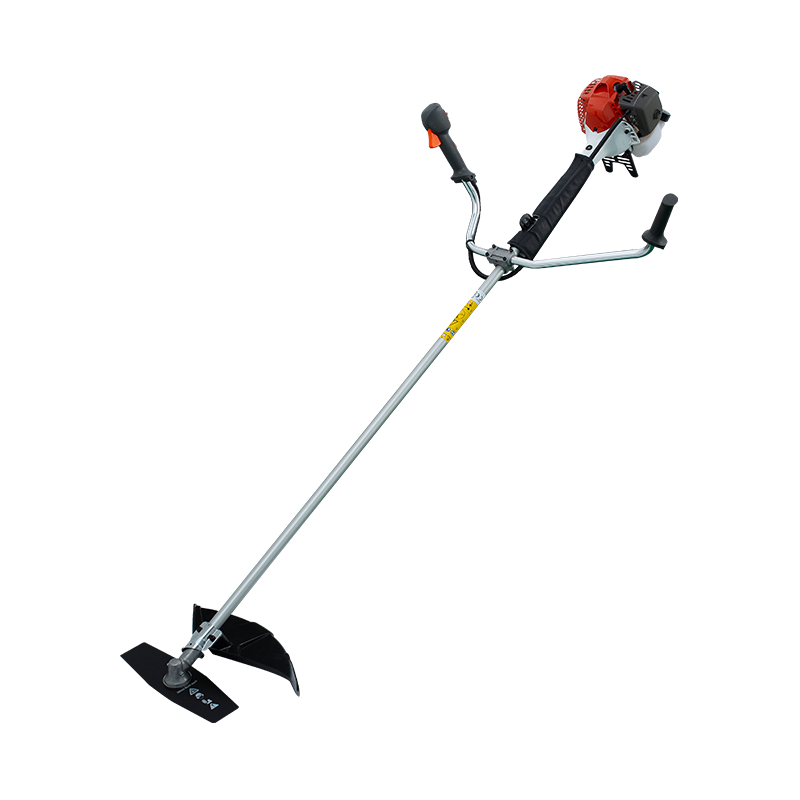
Brush Cutter Walk Behind: Precision on Slopes and Tight Spaces
A brush cutter walk behind unit is a self-propelled or operator-pushed machine with a cutting deck driven by a dedicated engine — typically ranging from 5.5 HP for light-duty residential models up to 15–18 HP for commercial-grade units. The operator walks behind and steers using handlebar controls, making it the most maneuverable format available for brush clearing.
Walk-behind brush cutters excel on terrain where ride-on machines become impractical: steep embankments, drainage ditches, fence lines, orchard rows, and tight corridors between structures. Most commercial models feature three-wheel or four-wheel configurations with large pneumatic tires for stability on uneven ground, and cutting widths typically range from 20 to 30 inches.
Key Specifications to Evaluate
- Blade system: Tri-blade steel or star blade configurations handle woody brush better than nylon heads; blade engagement should be belt-driven with a dedicated idler for protection if the blade strikes rock.
- Drive system: Hydrostatic or differential drive allows controlled speed on slopes without abrupt stops. Some models offer all-wheel drive for loose or wet terrain.
- Operator fatigue: Vibration-isolated handlebars and deadman controls are standard on quality machines — critical for operators clearing large areas over multiple hours.
- Slope rating: Commercial walk-behind brush cutters are rated for slopes up to 45°, compared to 15–20° for most ride-on units, making them irreplaceable for highway rights-of-way and hillside vegetation management.
Brush Cutter Mower: Ride-On Power for Mid-Scale Properties
A brush cutter mower — often called a zero-turn brush mower or stand-on brush cutter — bridges the gap between a standard residential mower and a dedicated land-clearing machine. These ride-on units are built around commercial-grade reinforced decks, heavy-duty spindles, and high-torque engines (typically 23–35 HP) capable of processing brush up to 1.5 inches in diameter without the operator leaving the seat.
Zero-turn brush cutter mowers offer cutting widths from 48 to 72 inches and productivity rates of 2 to 5 acres per hour depending on vegetation density. Their maneuverability makes them well-suited for maintaining overgrown pastures, rural roadsides, campgrounds, and large residential properties with irregular wooded edges.
The most capable models use floating decks with heavy-gauge steel construction (7–10 gauge) to withstand impacts, and blade tip speeds exceeding 18,000 FPM for consistent cutting performance through dense material. Some manufacturers offer optional mulching systems that process cut vegetation into finer particles, reducing debris accumulation during seasonal maintenance cycles.
Towable Grass Cutter: High-Acreage Efficiency Behind a Tractor or ATV
A towable grass cutter — more precisely a tow-behind brush mower or rotary cutter — attaches to the 3-point hitch or drawbar of a tractor, ATV, or UTV and draws power from a PTO (power take-off) shaft or its own onboard engine. This format is the most cost-effective solution for clearing large, relatively flat acreages where the operator already owns a suitable tow vehicle.
PTO-driven rotary cutters are the dominant format for agricultural use, available in single-spindle widths from 4 to 10 feet and multi-spindle gang configurations extending to 20+ feet. Gear-driven rotary cutters are preferred over belt-driven for heavy brush work — they transfer more torque, run cooler under sustained load, and handle blade impact without slipping.
Tractor HP Requirements
Matching the tow vehicle's PTO output to the cutter's requirement is the single most important spec decision. Undersized tractors will bog down in heavy brush, causing overheating and premature drivetrain wear. As a general guideline:
- 4-foot cutter: minimum 20–25 PTO HP
- 5- to 6-foot cutter: minimum 35–50 PTO HP
- 7- to 8-foot cutter: minimum 60–80 PTO HP for medium brush; 90–100 PTO HP for heavy brush clearing
Engine-powered tow-behind units (independent of a tractor's PTO) are available for ATV and UTV users who need wider cutting widths without upgrading to a tractor — these typically run 14–23 HP gas engines and offer widths up to 60 inches.
Mower Brush Cutter Combinations: Versatility for Mixed Vegetation
A mower brush cutter combination unit handles the full spectrum from maintained turf to heavy overgrowth without requiring equipment changes. These machines — offered as both walk-behind and ride-on formats — feature interchangeable deck systems or multi-function blade configurations that switch between fine mowing and aggressive brush-cutting modes.
The practical advantage is consolidation: a single machine manages a property that includes both manicured lawn areas and rough brushy zones at the perimeter. This is common in agricultural properties, rural estates, and land management operations where vegetation types transition across the same site.
Flail mower attachments are the most versatile combination option for tractor owners — they mulch grass cleanly at low settings and process brush and small saplings at higher blade speeds. Flail mowers produce a finer, more evenly distributed cut than rotary cutters, making them suitable for both finish mowing and heavy vegetation work without leaving large debris piles.
Land Clearing Brush Cutter: Machines for Heavy Overgrowth and Acreage Reclamation
A land clearing brush cutter is a purpose-built machine for reclaiming heavily overgrown land — processing saplings 3–6 inches in diameter, dense briar patches, tall invasive grasses, and standing dead wood that would destroy conventional mowing equipment. These machines are used in forestry, utility corridor maintenance, pipeline right-of-way clearing, and large-scale agricultural land reclamation.
The primary formats for serious land clearing include:
- Skid steer forestry mulchers: Hydraulic-driven drum mulchers or disc mulchers that attach to a skid steer loader, processing entire trees up to 6–8 inches in diameter and reducing them to fine mulch in a single pass. Productivity on heavy brush can reach 1–3 acres per hour. These are the highest-capacity option for confined areas or terrain where tracked equipment provides better stability.
- Tractor PTO forestry mulchers: 3-point hitch mulching heads driven by high-output tractors (100–200+ PTO HP). Wider working widths (up to 8 feet) suit open terrain and long corridor clearing.
- Dedicated land-clearing walk-behind units: High-HP walk-behind brush cutters (up to 18 HP) with reinforced blade systems for operators working steep or inaccessible slopes where tracked equipment cannot safely operate.
For one-time land reclamation projects on smaller properties (under 5 acres), renting a skid steer forestry mulcher is typically more cost-effective than purchasing dedicated equipment. For ongoing maintenance of cleared land, transitioning to a towable rotary cutter or ride-on brush mower after initial clearing reduces operating costs substantially.
Brush Cutter for UTV: Expanding Capability Without a Tractor
A brush cutter for UTV is a hydraulic or engine-driven mowing attachment designed to mount on the front, rear, or side of a utility terrain vehicle, converting the UTV into a capable brush management platform without requiring a full-size tractor. This format has grown rapidly in popularity among landowners who use UTVs (Polaris Ranger, John Deere Gator, Can-Am Defender, etc.) as their primary work vehicle.
UTV brush cutter attachments fall into two categories:
- Hydraulically powered attachments: These connect to an aftermarket hydraulic system installed on the UTV (or factory hydraulics on equipped models) and power a rotary, flail, or disc cutter. Cutting widths of 48–72 inches are typical, with the ability to process brush up to 2 inches in diameter.
- Engine-independent tow-behind units: Small towable brush mowers with their own gas or battery-electric power source, towed behind the UTV via a standard receiver hitch. These require no hydraulic system modification and are more accessible for entry-level users.
The key constraint with UTV-mounted brush cutters is hydraulic flow rate. Most aftermarket hydraulic kits for UTVs deliver 5–8 GPM, which is adequate for light-to-medium brush work but limits blade speed and cutting force compared to tractor-powered equivalents. For operators managing significant acreage with heavy brush, a UTV attachment is best treated as a maintenance tool following an initial tractor or skid steer clearing pass — not as a primary land-clearing machine.
Comparison: Brush Cutter Formats at a Glance
| Format | Best Application | Max Stem Diameter | Typical Acreage Range |
|---|---|---|---|
| Walk-behind | Slopes, ditches, tight areas | 1–1.5 in | Under 2 acres/day |
| Ride-on brush mower | Pastures, rural properties | 1.5 in | 2–5 acres/hr |
| Towable (PTO rotary cutter) | Large flat fields, roadsides | 2–3 in | 5–20+ acres/hr |
| UTV attachment | Maintenance, trails, no tractor | 1.5–2 in | 1–3 acres/hr |
| Land clearing / forestry mulcher | Reclamation, heavy overgrowth | 4–8 in | 1–3 acres/hr |