English
 Español
Content
What Is a Brush Cutter and How Does It Differ from a Trimmer?
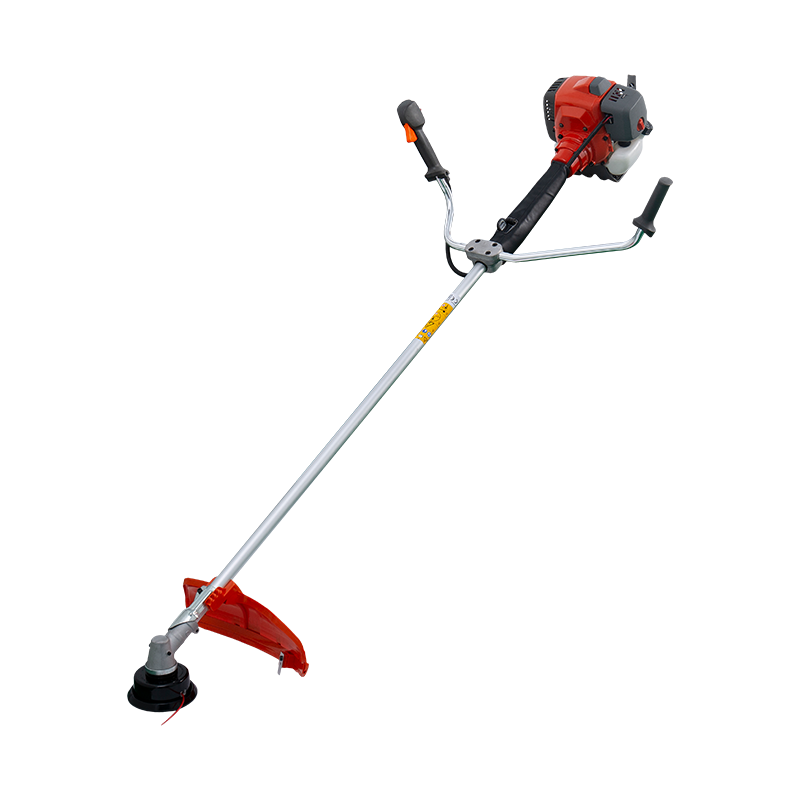
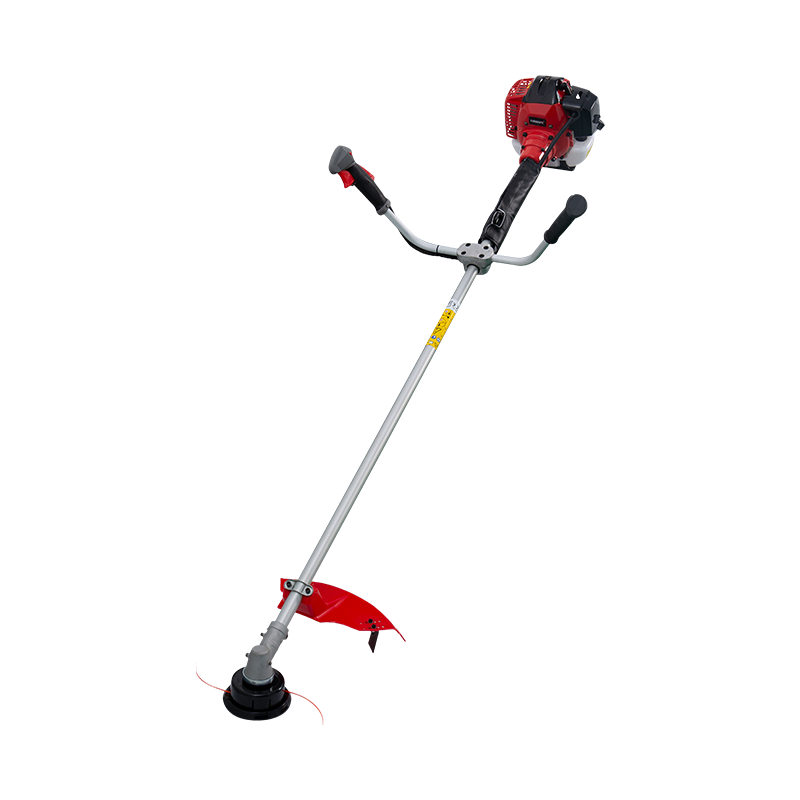
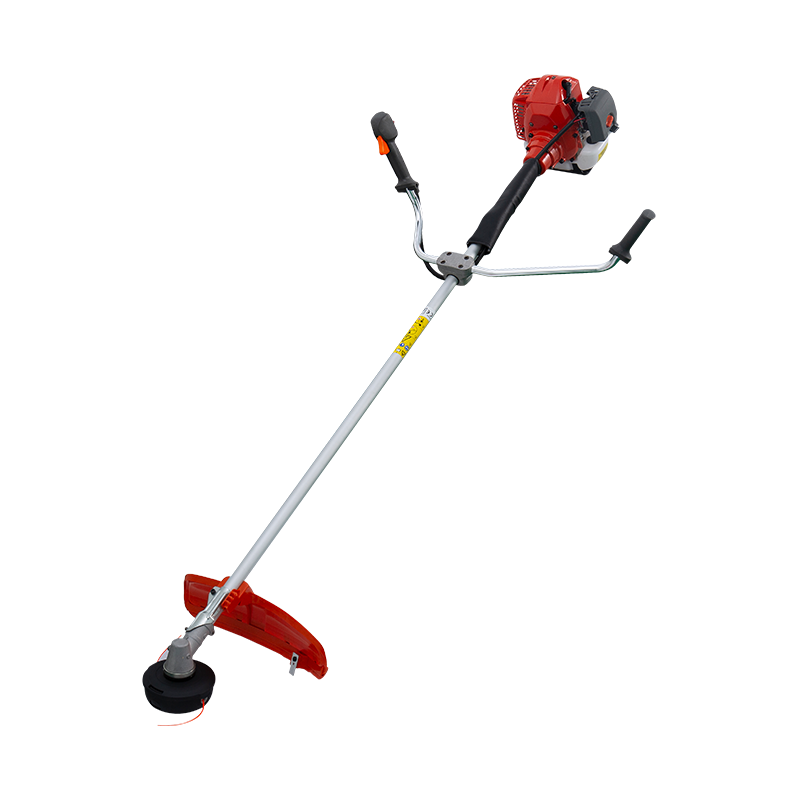
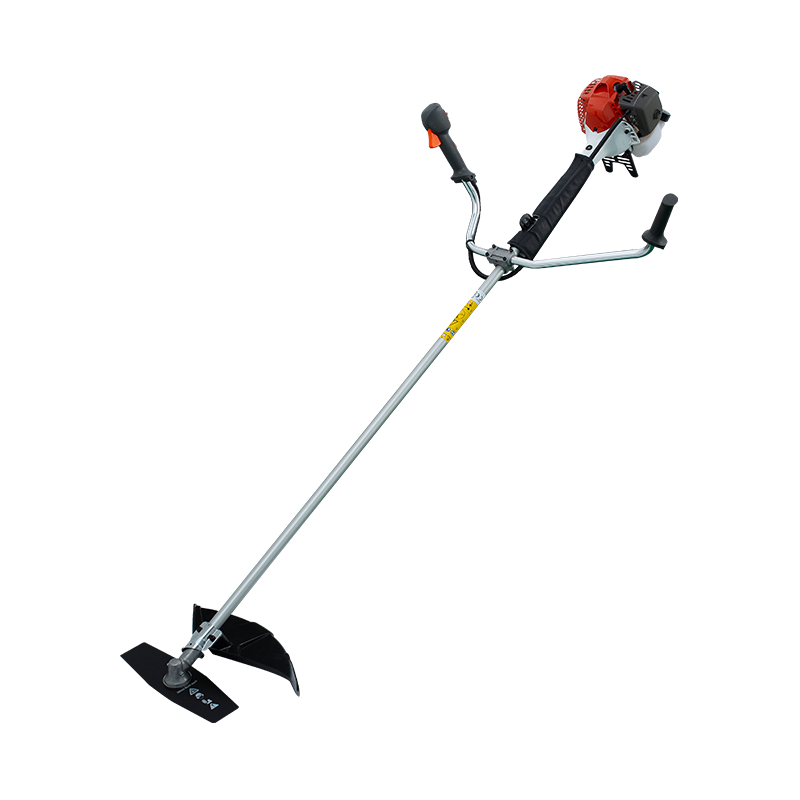
A brush cutter is a heavy-duty outdoor power tool designed to cut through dense vegetation that standard string trimmers cannot handle — including thick grass, woody shrubs, brambles, saplings up to 3–4 cm in diameter, and coarse weeds on rough terrain. Where a lawn trimmer relies on nylon line and is built for maintained grass edges, a brush cutter uses a solid metal blade or heavy-duty plastic blade assembly driven by a more powerful engine or motor, giving it the torque to work through thick, tangled growth without bogging down.
The core mechanical difference is the drive shaft and cutting head. Brush cutters use a straight or curved rigid drive shaft — typically with a gear head at the cutting end — that can transmit higher torque than flexible cable-driven trimmers. Combined with blade options ranging from 2-tooth to 80-tooth circular saw blades, they become versatile land-clearing tools suited for agriculture, forestry, road maintenance, and large-scale property management.
Engine displacement is another clear differentiator. Consumer string trimmers typically run 20–25cc engines, while professional brush cutters are commonly rated at 40cc to 80cc, with some commercial clearing models exceeding that range. This directly translates to blade tip speeds of 6,000–9,000 RPM and the ability to sustain cutting performance across extended workdays.
Backpack Brush Cutter vs Side Pack Brush Cutter: Key Differences
For operators working long shifts in demanding terrain, how the power unit is carried is just as important as the engine's raw output. The two dominant harness-mounted configurations — backpack brush cutters and side pack brush cutters — distribute weight and balance the machine in fundamentally different ways, each suited to specific working conditions.
Backpack Brush Cutter
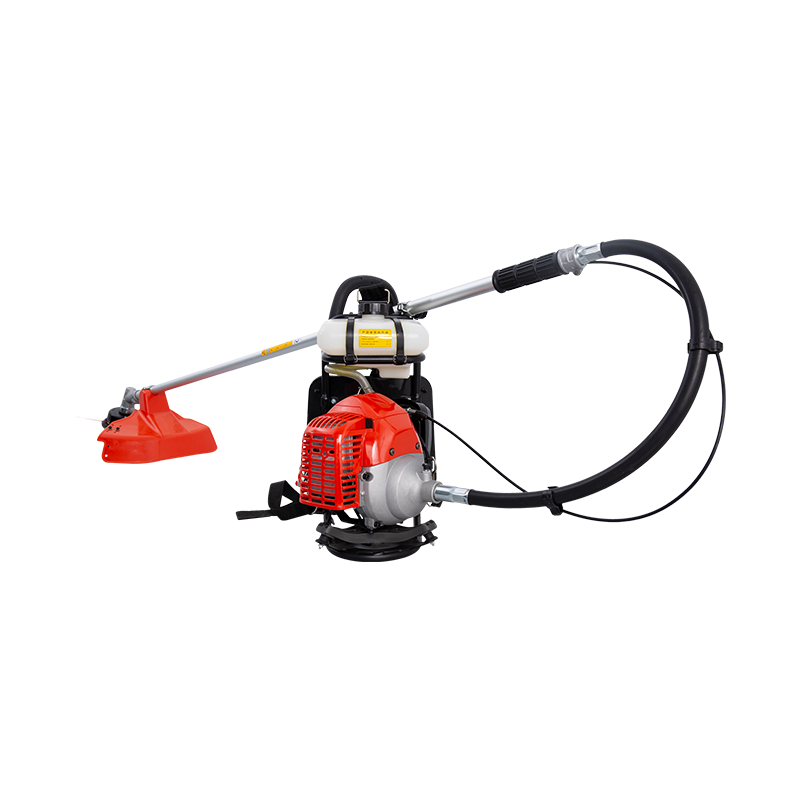
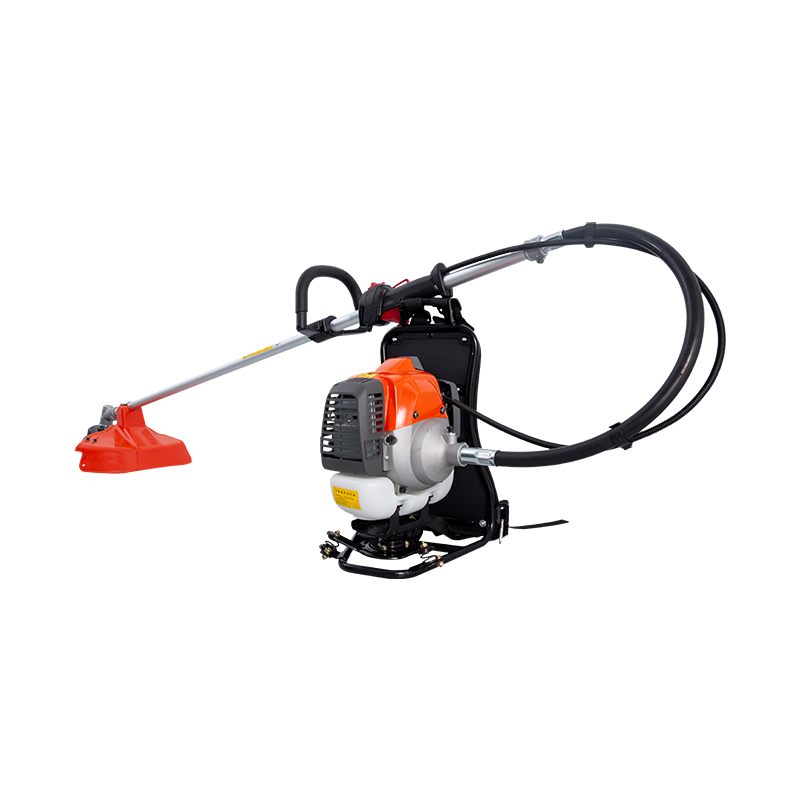
A backpack brush cutter mounts the engine and fuel tank in a frame worn on the operator's back, connected to the cutting unit via a flexible drive shaft. This configuration centers the heaviest mass close to the operator's spine and distributes load across both shoulders and the hip belt, significantly reducing arm and shoulder fatigue during prolonged use. The cutting arm itself becomes lighter to swing since it carries no engine weight.
Backpack models are preferred for:
- Steep slopes and uneven ground where maintaining balance is critical
- Dense undergrowth requiring wide, aggressive cutting arcs
- Professional operators working 6–10 hour shifts daily
- Orchard and vineyard maintenance where maneuverability between rows is needed
The primary trade-off is a flexible shaft, which introduces minor power loss compared to a rigid connection, and the added complexity of the flexible cable requiring periodic inspection and lubrication.
Side Pack Brush Cutter
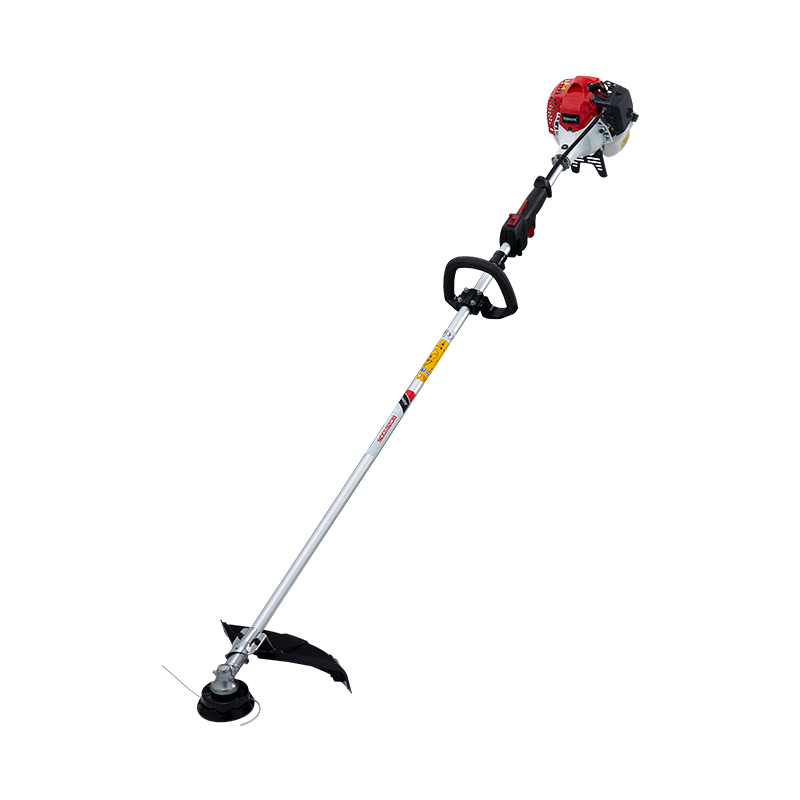
A side pack brush cutter — sometimes called a hip-mount or hip-pack brush cutter — positions the power unit on a frame at the operator's side or hip, connected to a rigid drive shaft running directly to the cutting head. This straight-line power transmission is mechanically more efficient, delivering full engine torque to the blade with minimal loss.
Side pack models are preferred for:
- High-power clearing tasks requiring maximum blade torque (large-diameter saplings, dense bamboo, heavy scrub)
- Road verge and right-of-way clearing on relatively flat terrain
- Operators who prefer direct engine feedback through a rigid shaft
- Applications where engine accessibility for field maintenance is a priority
The rigid shaft makes the overall unit slightly less maneuverable on steep hillsides compared to backpack configurations, and the side-mounted weight distribution requires a well-fitted harness to avoid hip strain over long periods.
| Feature | Backpack Brush Cutter | Side Pack Brush Cutter |
|---|---|---|
| Drive Shaft | Flexible | Rigid (straight) |
| Power Transmission | Slight loss via flexible cable | Full, direct torque delivery |
| Weight Distribution | Both shoulders + hip belt | Hip / side frame |
| Operator Fatigue (long shifts) | Lower — better ergonomics | Moderate — hip load focus |
| Slope Performance | Excellent | Good on moderate slopes |
| Best For | Hillside, orchard, long-shift work | Heavy clearing, flat terrain, max power |
What Makes a High Quality Brush Cutter
The difference between a high quality brush cutter and a budget model becomes clear within the first season of professional use. Premium machines are engineered to sustain performance under continuous workloads, minimize downtime, and protect operator health through better vibration management and ergonomic design. Here are the construction and engineering characteristics that separate professional-grade units from entry-level alternatives.
Engine and Power Unit Quality
Professional brush cutters use stratified charge or low-emission 2-stroke engines, or increasingly, commercial-grade 4-stroke engines that run on straight gasoline. Stratified engines introduce a layer of fresh air ahead of the fuel-air charge during the scavenging phase, reducing fuel consumption by up to 20% and cutting HC emissions significantly compared to conventional 2-strokes. Engine crankcase and cylinder materials matter too — forged aluminum crankcases and chrome or nikasil-coated cylinders resist wear far better than cast components found in budget models.
Anti-Vibration Systems
Prolonged exposure to tool vibration causes Hand-Arm Vibration Syndrome (HAVS), a progressive and irreversible condition affecting blood vessels and nerves in the hands. High quality brush cutters incorporate multi-point anti-vibration mounts — typically rubber or spring-damped isolation systems between the engine housing and the drive tube — that reduce vibration levels at the handles to below 5 m/s² weighted acceleration. Entry-level machines often transmit 8–12 m/s², which can exceed safe daily exposure limits in as little as 2 hours of continuous operation according to EU Directive 2002/44/EC standards.
Drive Shaft and Gear Head Construction
The drive shaft and gear head are high-stress components that fail prematurely in low-quality machines. In professional units, drive shafts are solid steel or high-tensile alloy rod (for rigid-shaft models) running in sealed, grease-packed bearings along the full tube length. The gear head — which changes rotational direction 30° to 40° to drive the cutting blade — uses hardened bevel gears with a grease port for field lubrication. A gear head rated for the engine's full torque output, with a service life of 500+ hours between overhauls, is a reliable benchmark for quality.
Harness and Operator Interface
A well-designed harness is not optional equipment — it is integral to the machine's usability over a full workday. High quality brush cutters include padded, adjustable shoulder straps, a rigid hip pad or hip belt, and a quick-release buckle that allows the operator to drop the unit instantly in an emergency. Loop handles and multi-position handlebar assemblies that allow the cutting arm to be balanced at the operator's preferred swing point further reduce cumulative strain.
Blade Compatibility and Cutting Head Versatility
The best professional brush cutters accept a wide range of blade types through a standardized mounting interface — typically a 25.4mm or 1-inch arbor with a locking nut system. This allows the operator to switch between:
- 2-tooth or 3-tooth metal blades — for medium shrubs and coarse grass
- 8-tooth to 40-tooth circular blades — for woody stems and saplings
- 80-tooth carbide-tipped saw blades — for dense bamboo and hardwood saplings up to 4 cm diameter
- Heavy-duty nylon head — for standard grass trimming when blade use is not required
Proprietary cutting head fittings that lock users into one blade type or one supplier's accessories are a clear indicator of a lower-tier product.
Choosing the Right Brush Cutter for Your Application
Matching machine type to task prevents both under-specifying (which leads to premature wear and operator frustration) and over-specifying (unnecessary cost and weight). Use the following framework to guide selection:
By Terrain
- Flat farmland, roadsides, and paddocks — a side pack brush cutter with a rigid shaft maximizes torque for cutting dense vegetation efficiently across open ground.
- Hillsides, terraced orchards, and vineyards — a backpack brush cutter's centered mass and flexible shaft give operators stability and maneuverability without compromising safety on uneven ground.
- Forested or densely planted areas — backpack configuration again preferred; the lighter cutting arm reduces fatigue during the constant repositioning required between trees and rows.
By Vegetation Type
- Coarse grass and light shrubs — 40–50cc engine with a 3-tooth blade; either configuration is appropriate.
- Dense scrub, brambles, and woody stems — 52–63cc engine with an 8-tooth to 40-tooth blade; side pack preferred for torque delivery.
- Bamboo, hardwood saplings, and invasive species clearing — 65cc+ engine with a carbide-tipped 80-tooth blade; side pack configuration for maximum sustained power.
By Daily Usage Hours
For operators working more than 4 hours per day, investing in a professional-grade machine with a full anti-vibration system, padded harness, and commercial engine warranty is not a luxury — it is a practical health and productivity decision. The productivity gap between a well-fitted professional machine and a budget unit widens significantly over a 200–400 hour annual operating season, and the reduction in maintenance downtime alone typically offsets the higher purchase price within two seasons.