English
 Español
Content
- 1 What is a Long Reach Gas Pole Saw?
- 2 Choosing the Right Long Reach Gas Pole Saw: A Detailed Comparison
- 3 Top Applications and Effective Usage Techniques
- 4 Essential Maintenance for Longevity and Performance
- 5 Safety First: Non-Negotiable Practices
- 6
- 7 Frequently Asked Questions (FAQs)
- 7.1 1. What is the maximum branch thickness a gas pole saw can handle?
- 7.2 2. How often should I sharpen the chain on my gas pole saw?
- 7.3 3. Can I use regular motor oil for the bar and chain lubrication?
- 7.4 4. Why does my gas pole saw chain keep coming loose?
- 7.5 5. Is it safe to use a gas pole saw in wet conditions?
- 8 References
Maintaining a pristine and safe property often requires reaching those high, unruly branches that standard tools can't touch. For extensive landscaping, orchard management, or post-storm cleanup, a powerful and reliable tool is essential. Enter the Long Reach Gas Pole Saw, a specialized piece of equipment designed to combine cutting power with extended reach. This guide delves deep into everything you need to know about gas-powered pole saws, helping you make an informed decision and use your tool safely and effectively for years to come.
As an emerging factory integrating R&D, production, and sales of garden and agricultural machinery, Changzhou Noah Power Machinery Co., Ltd. understands the critical role that robust, dependable tools play for professionals and serious homeowners. We adhere to the principle of quality first, ensuring that products like pole saws are engineered for performance, durability, and user safety, standing out in a competitive market through continuous innovation.
What is a Long Reach Gas Pole Saw?
A long reach gas pole saw is a powered cutting tool that combines a gasoline engine with a chainsaw-style cutting bar and chain, mounted on the end of a lightweight, extendable pole. Unlike electric or cordless models, the gas-powered variant offers unparalleled freedom of movement and sustained power for heavy-duty cutting tasks far from a power source.
Key Components and Advantages
- Gasoline Engine: Provides high power-to-weight ratio and continuous runtime, limited only by fuel capacity.
- Extendable Pole: Typically allows reach from 8 to over 15 feet, keeping the user safely on the ground.
- Cutting Attachment: Features a professional-grade guide bar and chain for clean cuts through thick branches.
- Primary Advantage: Complete portability and power for tackling large properties, storm damage, or remote orchard work without the constraint of cords or battery life.
Choosing the Right Long Reach Gas Pole Saw: A Detailed Comparison
Selecting the ideal pole saw involves balancing several factors. Understanding the best gas pole saw for tall trees is not just about maximum reach; it's about the synergy between power, weight, and ergonomics. To help you navigate the key differences, we've broken down the critical considerations.
Power and Performance Metrics
- Engine Displacement (CC): A larger engine (e.g., 30-45cc) delivers more torque for cutting denser, harder wood without stalling.
- Bar Length: Determines the maximum branch diameter you can cut in a single pass. For most property maintenance, a 10-12 inch bar is sufficient.
When comparing power needs, a homeowner trimming softwood pines may find a smaller engine adequate. In contrast, a professional arborist dealing with hardwood oak limbs would require a higher-displacement engine for consistent performance and to prevent blade binding.
| Use Case Scenario | Recommended Engine Size | Recommended Bar Length |
|---|---|---|
| Light pruning of thin branches (under 4") | 25-30cc | 8-10 inches |
| General property maintenance (4"-8" branches) | 30-38cc | 10-12 inches |
| Heavy-duty/Professional use (8"+ branches, frequent use) | 38cc and above | 12-14 inches |
Reach, Weight, and Ergonomics
Extended reach often comes with added weight. A model optimized as a lightweight gas pole saw for residential use prioritizes user comfort over maximum cutting capacity. Key points include:
- Total Extended Reach: Calculated as (User's height + arm length + pole length). Most poles extend between 10-15 feet.
- Weight Distribution: Well-designed poles have the engine mounted low to counterbalance the cutting head, reducing arm fatigue.
- Ergonomic Features: Look for anti-vibration handles, adjustable secondary handles, and lightweight pole materials like aluminum.
Top Applications and Effective Usage Techniques
A long reach gas pole saw is versatile, but knowing its best applications ensures efficiency and safety. One of the most common inquiries we encounter relates to the difference between gas and electric pole saws for large yards. The core distinction lies in runtime and raw power: gas models excel in large, uninterrupted jobs away from outlets, while electric models suit smaller, quieter tasks near power sources.
Primary Applications
- Tree Pruning and Canopy Thinning: Safely remove deadwood, crossed branches, and shape trees from the ground.
- Storm Cleanup: Quickly clear fallen limbs and debris after severe weather events.
- Orchard Management: Maintain fruit trees by pruning for health and sunlight penetration.
- Right-of-Way Clearing: Manage brush and overhanging branches along fences, trails, or property edges.
Step-by-Step Safe Operation Guide
Pre-Operation Checklist
- Inspect the saw for loose parts, damage, and chain tension.
- Ensure the chain is sharp and properly lubricated.
- Check fuel and oil levels using the correct mix ratio (typically 50:1).
- Clear the work area of people, pets, and obstacles.
- Don personal protective equipment (PPE): helmet, safety glasses, hearing protection, gloves, and cut-resistant chaps.
Cutting Techniques
- Always hold the saw firmly with both hands.
- Use a steady, controlled motion; never force the saw.
- Be aware of the "kickback zone" (the upper quadrant of the bar tip) and avoid contacting it with any object.
- Plan each cut and the branch's fall path. Use the "three-cut method" for heavier limbs to prevent bark tearing.
Essential Maintenance for Longevity and Performance
Regular maintenance is non-negotiable for a gas-powered tool. A well-maintained saw is a safe and effective saw. For users seeking gas pole saw maintenance tips for extended lifespan, a consistent routine is key.
Routine Maintenance Schedule
| After Every Use | Weekly or Monthly (Based on Use) | Seasonal/Annual |
|---|---|---|
| Clean debris from the saw body and cooling fins. | Sharpen or replace the chain. | Deep clean the air filter; replace if necessary. |
| Check chain tension and adjust. | Inspect guide bar for wear and grooves; dress or flip as needed. | Check and clean the spark plug. |
| Refuel and add bar & chain oil. | Check all nuts, bolts, and fittings. | Consider professional servicing for engine components. |
Fuel System and Storage Care
Proper fuel management prevents most engine issues. To address the common need for troubleshooting a gas pole saw that won't start, often the culprit is old fuel. Stale gasoline can clog carburetors and cause starting failures within 30 days[1].
- Fuel Mix: Always use fresh, high-octane gasoline and the manufacturer's specified 2-stroke oil ratio.
- Storage: For long-term storage (over 30 days), either run the engine until the carburetor is dry or use a fuel stabilizer. Store in a cool, dry place.
Safety First: Non-Negotiable Practices
Operating any chainsaw, especially on a pole, demands respect for the tool's power. Observing strict safety protocols prevents serious injury. This is closely related to understanding safety features to look for in a professional gas pole saw.
Critical Safety Features
- Chain Brake: Stops the chain within milliseconds if activated by kickback or manually.
- Anti-Vibration System: Reduces user fatigue and improves control.
- Throttle Lockout: Prevents accidental throttle engagement.
- Kickback Reduction: Features like low-kickback chains and bumper spikes.
Operational Safety Rules
- Never operate the saw above shoulder height.
- Maintain secure footing and balance at all times.
- Be acutely aware of electrical lines; always assume they are live.
- Never cut with the tip of the bar.
- Always have a planned escape path from a falling branch.
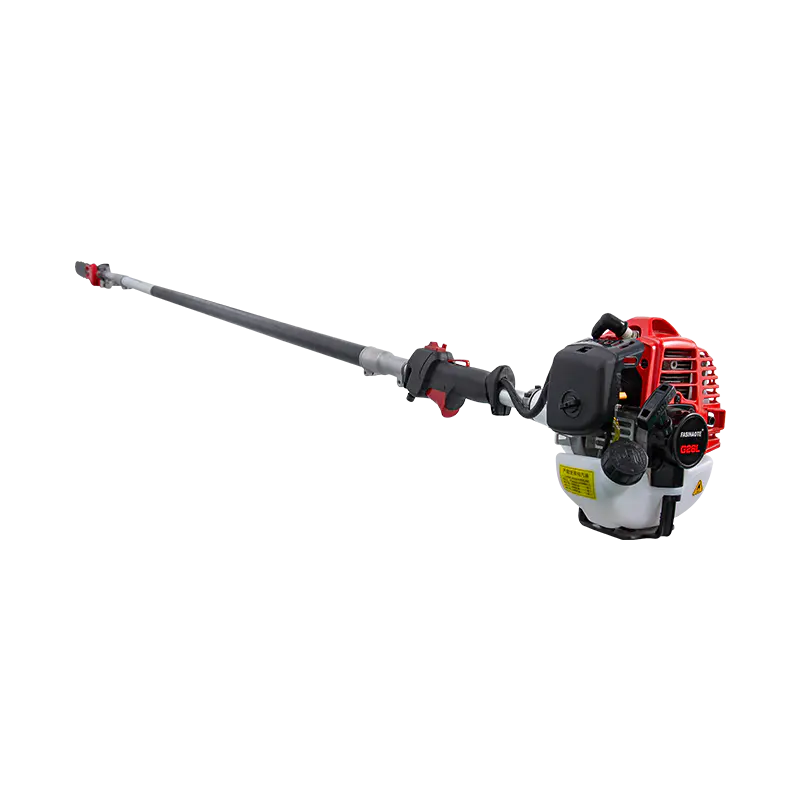
A Long Reach Gas Pole Saw is an indispensable tool for anyone responsible for maintaining large trees and expansive properties. Its combination of portability, power, and reach is unmatched for serious cutting tasks. By choosing the right model based on power, reach, and ergonomics, employing correct cutting techniques, adhering to a rigorous maintenance schedule, and prioritizing safety above all else, you can ensure this investment serves you well for many seasons. At Changzhou Noah Power Machinery Co., Ltd., our customer-centered principle drives us to innovate and produce high-quality garden machinery that meets these exacting demands, helping you tackle your toughest outdoor challenges with confidence.
Frequently Asked Questions (FAQs)
1. What is the maximum branch thickness a gas pole saw can handle?
The maximum cut is generally determined by the guide bar length. For example, a saw with a 12-inch bar can typically cut through branches up to about 10 inches in diameter in a single pass. Attempting to cut larger branches can strain the engine, cause kickback, or bind the chain. For larger limbs, use the three-cut pruning technique.
2. How often should I sharpen the chain on my gas pole saw?
The frequency depends on usage. If you hit dirt or rocks, it requires immediate sharpening. Under normal use, inspect the chain before each use. Dull chains produce fine sawdust instead of chips, require more force to cut, and increase the risk of kickback. For frequent users, sharpening every few hours of runtime is common.
3. Can I use regular motor oil for the bar and chain lubrication?
No, it is not recommended. Always use specially formulated bar and chain oil. It is designed to be "tacky" to stay on the chain at high speeds, resist flinging off, and provide superior lubrication under high pressure and heat. Using regular motor oil can lead to premature wear of the bar and chain and reduced cutting efficiency.
4. Why does my gas pole saw chain keep coming loose?
A frequently loosening chain is often due to a new chain stretching (which is normal initially), a worn drive sprocket, or a damaged bar. Ensure you properly tension a new chain after the first few minutes of operation. If the problem persists in an older saw, inspect the sprocket and bar rails for wear, as these components may need replacement.
5. Is it safe to use a gas pole saw in wet conditions?
It is highly discouraged. Wet conditions make branches, the ground, and the tool itself slippery, significantly increasing the risk of loss of control and electrocution if near hidden or overhead power lines. Furthermore, water can damage the engine's electrical components (like the ignition system). Always wait for dry conditions to operate your pole saw.
References
[1] Briggs & Stratton. (n.d.). *Ethanol Fuel and Small Engines*. Retrieved from Briggs & Stratton Corporation website. This source highlights the detrimental effects of stale ethanol-blended gasoline on small engine carburetors, a leading cause of starting failures.